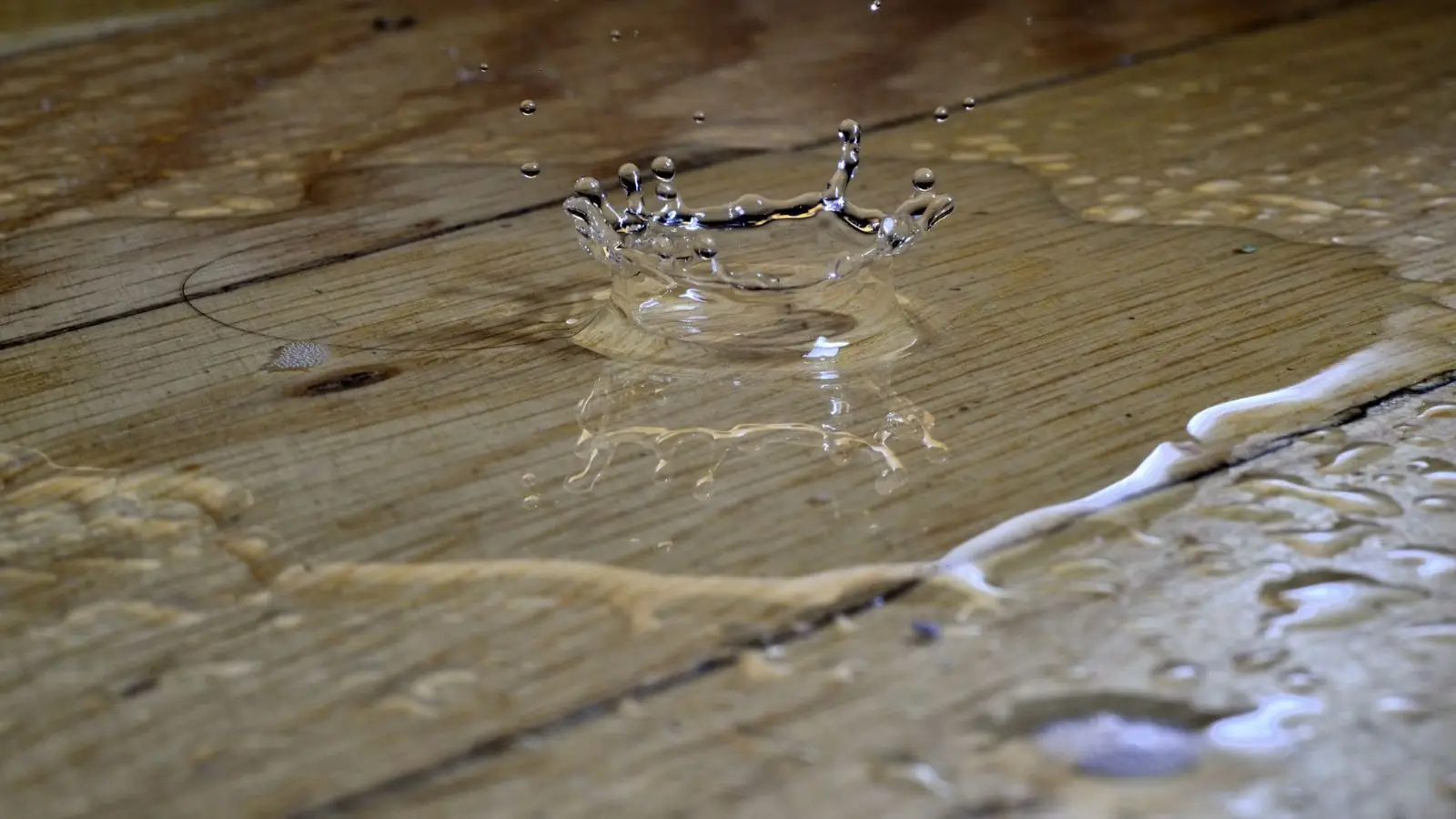
What water does to a wood floor
Wood floor water damage repair starts with understanding that wood is a sponge. It takes up moisture from below or from the surface and swells, and the board changes shape as it dries unevenly. That movement is what you see as cupping, crowning, gaps and buckling.
Solid hardwood and engineered wood respond differently. Engineered boards have a thin wear layer over plywood, so a heavy soak can delaminate them even if the surface looks fine.
Cupping, crowning, buckling: reading the signs
| Sign | What it looks like | Usual cause |
|---|---|---|
| Cupping | Board edges higher than the center | Moisture from below, such as a slab, crawl space or leak |
| Crowning | Board center higher than edges | Often follows cupping after sanding too early, or surface wetting |
| Buckling | Boards lift off the subfloor | Serious saturation, often a flood or long leak |
| Gaps | Spaces between boards after drying | Shrinkage after over-drying or past moisture |
| Dark staining | Black or gray at seams | Prolonged wetness, possibly mold |
Cupping is the most common early sign, and it often appears within a day or two of a leak. Crowning can be a second-stage problem. Both tell you moisture is still in the floor or beneath it.
Dry first, judge later
The biggest mistake is sanding or refinishing before the floor is actually dry. A floor that looks flat can still be wet inside, and finishing over moisture traps it. Drying a wood floor usually takes several days and sometimes longer, depending on species, thickness and how long it was wet.
Crews use floor drying mats, air movers and dehumidifiers, and they check readings daily. Our water mitigation work follows the published industry standard, ANSI/IICRC S500, so ask any company whether its crews do the same.
- Stop the source and extract standing water.
- Pull furniture and rugs off the floor, and lift baseboards if wet behind them.
- Set mats and air movers, with dehumidification to pull moisture from the room.
- Take moisture readings on the boards and subfloor each day.
- Wait until readings reach a normal dry level before deciding on repairs.
Wet hardwood and not sure if it is salvageable? Call (303) 952-8295 and we will explain scope and price before any work starts.
Call (303) 952-8295Sand and refinish or replace?
If the boards cupped but flattened as they dried, a sand and refinish often restores them. If boards stay buckled, split, delaminated or stained dark, replacement is the better call. Engineered flooring with a thin wear layer may not have enough material left to sand.
The decision depends on thickness, finish, and how much of the floor is affected, which is why we explain scope before work starts. Matching new boards to old ones, especially on older floors, can also affect how much gets refinished.
Do not cover wet floors
Do not lay rugs, vinyl or new flooring over a damp floor. Trapped moisture can lead to mold growth under the covering and more damage to the subfloor.
Cost factors without the guesswork
- How many rooms and square footage are affected
- Solid or engineered boards, and the thickness of each
- Whether the subfloor or underlayment also got wet
- How long the floor stayed wet before drying began
- Whether the finish must match adjoining rooms
- The need for baseboard removal, trim and paint afterward
Insurance may apply for sudden leaks, so check your policy and ask your insurer, and keep photos before the floor is touched. Water damage repair after drying covers the replacement and finishing steps.
Older homes and historic floors
Littleton has several historic districts, and older houses often keep original wood floors, which can be thicker and more sandable than modern boards. That helps, but older plumbing and plaster behind the baseboards can also hide a longer-running leak.
If your home is in a designated district, ask the city's historic preservation staff before altering the exterior. Interior floors are a different question, so ask your insurer and the city what applies.
Littleton, CO: a homeowner city with older floors
Census QuickFacts lists Littleton's 2025 population estimate at 46,246, with 20,449 households and an owner-occupied housing rate of 61.2 percent. Many floors here belong to owners who will live with the repair for years, so the choice between a quick patch and a proper job matters.
The city also has designated historic districts, including Downtown Littleton, Littleton Main Street, Louthan Heights and Arapaho Hills, and older buildings there often have original wood floors. Tie-back: if your floor is original, tell your contractor so they can test thickness before deciding between sanding and replacing.
Sources: Census QuickFacts for Littleton city, Littleton historic district designations.
What to do while the floor dries
While equipment runs, keep foot traffic light and keep furniture legs off the wet boards. Wood that is already swollen can dent and split under weight. If you have to walk across, use clean socks and avoid shoes.
Expect the room to be loud and warm for several days. That is normal, and it is what pulls moisture out of the boards and subfloor. Turning the equipment off early is the surest way to end up with a floor that cups again a week later.
Take your own photos of the floor on day one and again after drying. A clear before and after record makes it easier to compare options, and it supports any insurance claim you file.
Calling a crew from nearby
We dispatch around the clock and also serve homeowners in Denver and Lone Tree. We do not do waterproofing or foundation repair, so if a wet slab or crawl space is feeding the cupping, you will need a specialist for that part, and we will say so before work starts.
Common questions
Cupping can show up within a day or two, but it may keep developing as the floor dries. Early drying gives the boards the best chance of settling back.
Often, yes, if they are dried slowly and fully before sanding. Boards that stay buckled, split or delaminated usually need replacement.
It can be. The thin wear layer limits how much sanding is possible, and layers can separate when soaked. Thickness is checked before any decision.
Sudden and accidental leaks are often covered, but policies vary and gradual damage is often excluded. Check your policy and ask your insurer, and document the floor before work.
The city says to consult historic preservation staff before altering a designated building's exterior. For interior floors, ask the city what applies, and tell your contractor the floors are original so they can test before sanding.