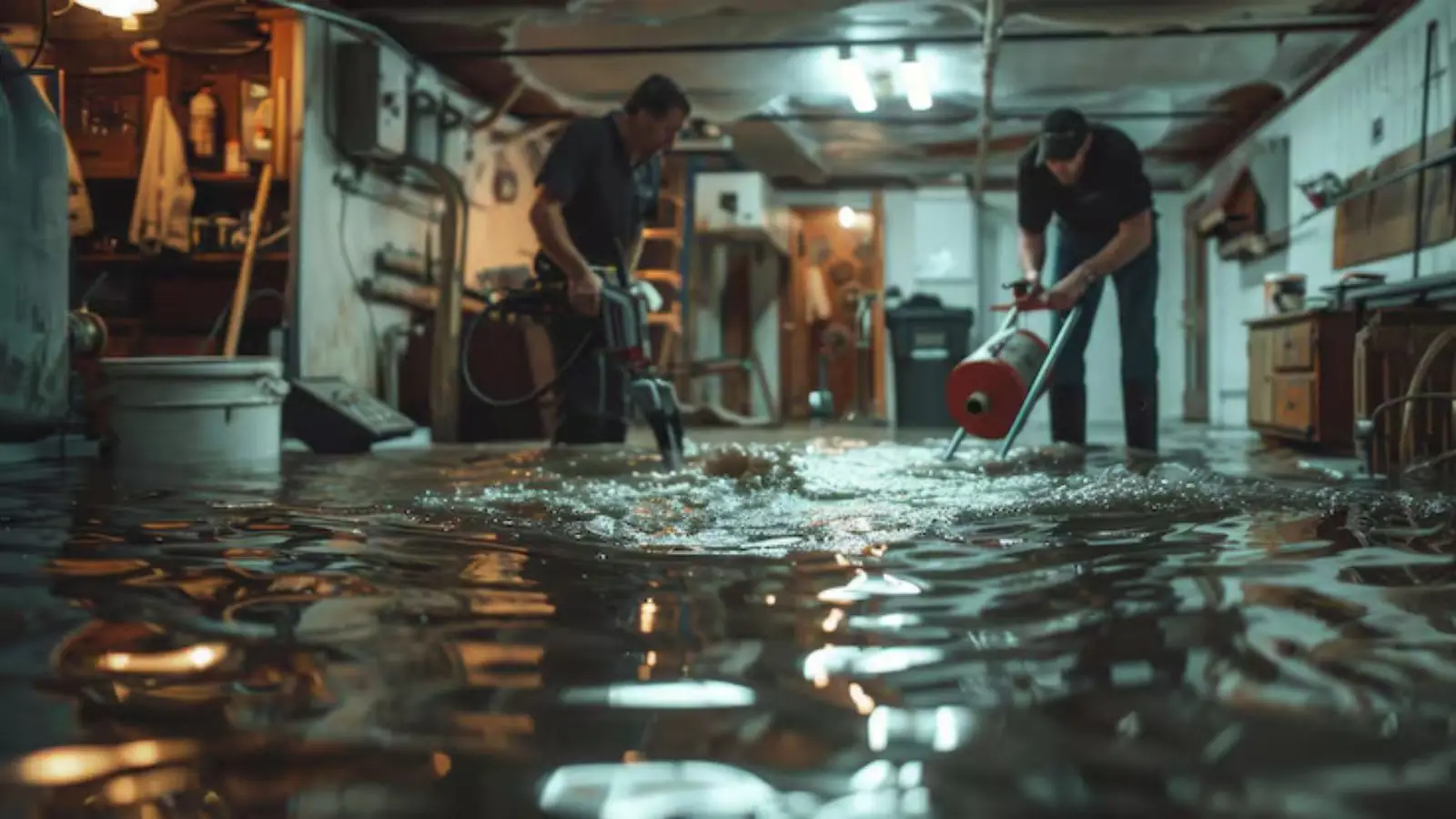
Emergency water removal is the job of getting standing water out of a building as quickly as it can be done safely. In Littleton, CO that usually means a flooded basement, a laundry room after a failed hose, or a kitchen floor under a ruptured supply line.
Pumps handle deep water, and extraction units pull what remains out of carpet, pad and hard floors. The order of work follows ANSI/IICRC S500, the published water damage restoration standard, which you can ask any company about.
Call our 24/7 line the moment you find water. Shut the main water valve if the source is a pipe, stay out of any water that could reach outlets, and keep the area closed off so the water does not travel into dry rooms.
When standing water is an emergency
Standing water is an emergency whenever it is deeper than a thin film, whenever it is still rising, and whenever it sits against drywall or on carpet. A basement with a few inches of water can soak the bottom of every wall in an hour. Each hour the water stays, more of the pad, baseboard and subfloor have to be replaced instead of dried.
Speed also changes what kind of water you are dealing with. Clean supply water becomes gray water as it picks up dirt from floors, and it can become contaminated if it sits long enough or came from a drain.
Before you step into the water
Cut power to the area only if you can reach the panel on dry ground. If water is touching outlets, appliances or the panel itself, do not enter and call 911 or your utility first. Sewage in the water means stay out entirely.
Burst pipe water damage: what to do in the first ten minutes
A burst pipe is the most common reason a Littleton homeowner needs fast extraction. Denver Water, the supplier for Littleton residents, says the main shut-off in most single-family homes is in the basement or crawl space on a wall facing the street. Closing it is the single most useful thing you can do, so locate it before you ever need it.
Frozen pipes bring a second rule from the same source: shut off the water before thawing, and use a hair dryer, never a torch. A frozen meter can flood a basement when it cracks, and replacing it falls on the homeowner.
The Colorado Division of Insurance advises homeowners to contact their insurer as soon as possible after a burst pipe and to take reasonable steps to prevent further damage while waiting for the insurer's instructions. Photograph everything before it moves. Ask your insurer what it needs before repairs begin.
How extraction is done
Assess depth and source
We confirm the water is off, check for electrical risk, and decide which pumps and units fit the depth.
Pump the bulk
Submersible pumps remove deep water, and truck-grade extraction units follow for what the pumps leave.
Extract the surfaces
Carpet, pad and hard floors are worked with wand tools to pull water out of the material.
Hand off to drying
Wet materials are marked and drying equipment is set so moisture does not linger.
Extraction is the first half of the job and drying is the second. Pulling the water out of carpet quickly saves some carpet, while pad is usually replaced because it holds water against the subfloor. Once the standing water is gone, the water mitigation phase takes over with air movers and dehumidifiers.
| Water source | Category | What it means for extraction |
|---|---|---|
| Broken supply line or fresh tap water | Category 1 | Usually the most savable, extract and dry quickly. |
| Washing machine or dishwasher overflow | Category 2 | Extract fast, plan on cleaning and sanitizing affected surfaces. |
| Sewer backup or rising groundwater | Category 3 | Treat as contaminated, porous materials generally come out. |
| Rain or snowmelt through a roof | Category 1 to 2 | Depends on what the water crossed, often insulation and ceiling drywall. |
Sewer backups and floor drains
Water coming up through a floor drain is a sewer problem until proven otherwise. The City of Littleton handles sewer emergencies and maintenance and lists a weekday line at 303-795-3959 with an after-hours line at 303-794-1551. If the main is blocked, the city or your sanitation district has to clear the line before any cleanup can last.
Call the city first for the blockage and call us for the extraction and sanitizing of what spilled into your home. Waste water is contaminated, so keep children and pets out until it is removed. The sanitizing step is covered in more detail under water damage cleanup, and a larger intrusion from outside the house falls under flood damage restoration.
What affects the cost of water removal
- How deep and how widespread the standing water is.
- The water category, because contaminated water needs more protection and more material removal.
- The type of flooring and whether carpet can be extracted in place.
- Whether the water reached finished walls, a finished basement or only a bare floor.
- How many drying days follow extraction.
Scope and price are explained before work starts. Insurance often responds to sudden and accidental water damage and usually does not respond to flood, so check your policy or ask your insurer, and keep photos and receipts. Call (303) 952-8295 to get your actual figure.
Standing water in your Littleton home? Call dispatch and we will get a crew moving.
Call (303) 952-8295We also run extraction calls into Morrison and the foothills side of the metro, where steep lots can send runoff straight toward a basement door.
Common questions
Yes. The line is staffed all hours, every day of the year. Call, tell us how deep the water is and where it came from, and we will explain what to do while a crew is dispatched.
Depth does not rule out a response. Deep water is pumped first, then extraction units and drying equipment finish the job. The depth and the water category shape the plan and the scope we explain to you.
For a small spill on a hard floor, yes. For water in carpet, a basement or anything that reached walls, a shop vac cannot pull enough water out of materials and it can also spread contamination. Also never use one on a wet floor near outlets.
Both, in that order of purpose. The city or your sanitation district handles the blocked main. We handle extraction, sanitizing and drying of what came into your home.
No. Removing water is not the same as stopping it from entering again. If groundwater keeps returning, you need a drainage or waterproofing contractor, and we can tell you what we see when we are on site.