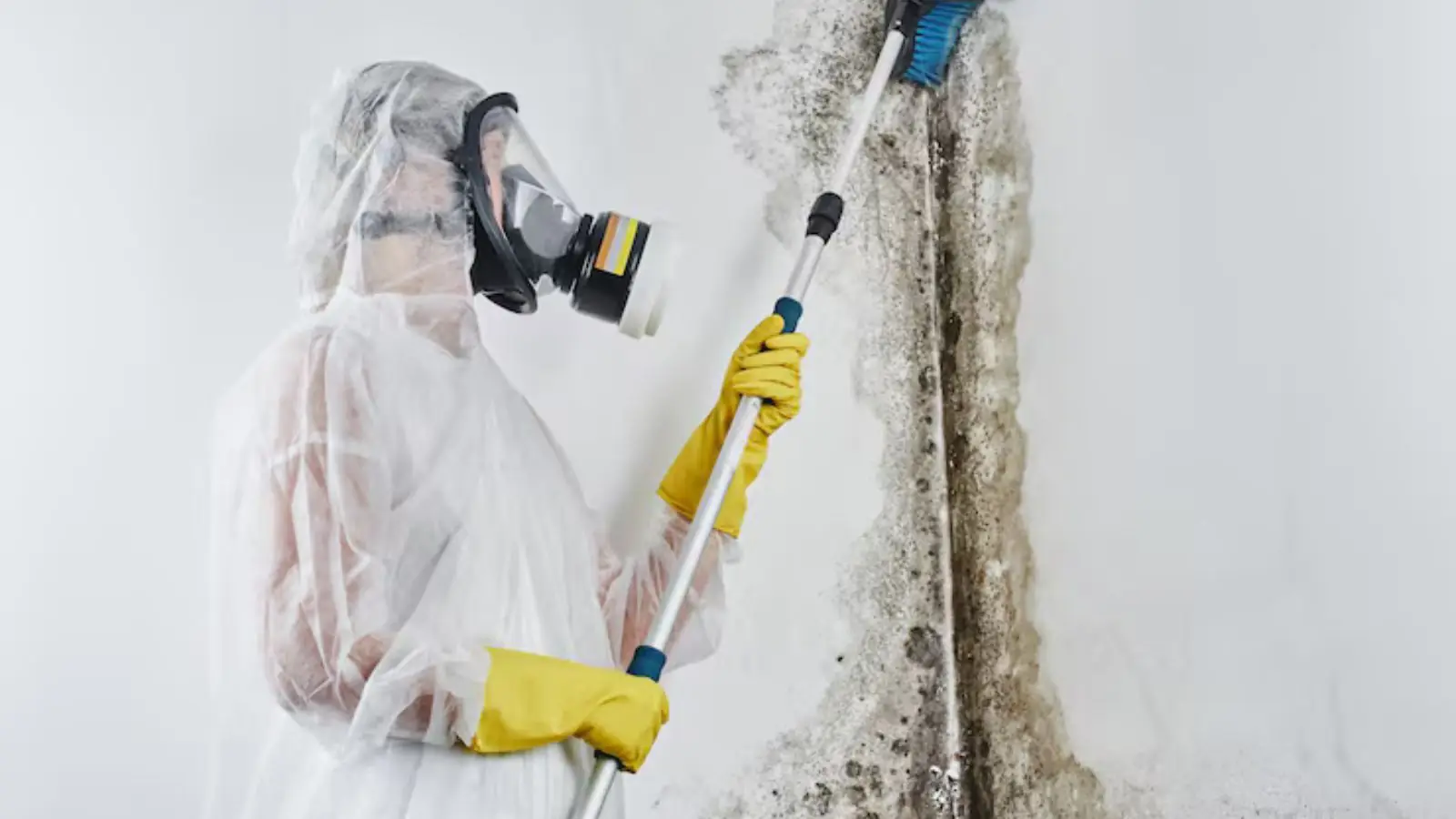
Mold remediation is the controlled removal of mold and mold-damaged materials, along with the work needed to stop the moisture that fed it. In Littleton, CO, most calls follow a leak: an upstairs toilet, a sink line, a roof, an air conditioning condensate line, or a wet basement. Mold needs moisture to grow, so the job always starts by finding and fixing the water source.
If you have an active leak, call the 24/7 line first so the water is dealt with. If the leak is fixed and you are looking at growth on a ceiling, wall, closet or basement surface, this is the page for you.
A musty smell or dark spots: where this usually starts
Most people find mold by smell or by sight, a musty odor in a closet or basement, or dark spots on a ceiling corner or wall. Color alone does not tell you what it is. Dirt, soot, mildew and stains can look similar, so inspection and sometimes sampling are how the answer is confirmed.
What the symptoms share is a moisture source. A ceiling spot below a bathroom, a baseboard stain near a window well, or a smell near a water heater tells you where to look. Finding that source is step one of any real remediation plan.
Mold after water damage: why drying speed matters
Mold can start growing within 24 to 48 hours in wet, organic materials such as drywall paper, wood and carpet pad. That is why water mitigation and quick removal of soaked materials are the best protection. A wall that was dried within a day or two rarely needs mold work, and one that sat damp for a week or more often does.
If you already dried the area and growth appeared later, there may be moisture you missed behind a baseboard, inside a cavity or under flooring. Moisture mapping with a meter and thermal camera finds it.
| Situation | Usual path | Call a professional when |
|---|---|---|
| Small surface spot, source fixed | Clean hard surfaces, dry, monitor | It returns or spreads after cleaning |
| Growth on drywall or ceiling board | Material is usually removed | The area is larger than a few square feet |
| Musty smell, nothing visible | Look for hidden moisture | The smell persists after you dry the area |
| Growth after flood or sewage | Treat as contaminated | Always, because of the contamination |
| Buyer, lender or landlord requires clearance | Remediation plus independent testing | A third party must verify the result |
Mold removal and black mold cleanup: how it is done
Find the moisture
Meters and thermal imaging locate the leak and any wet materials before work begins.
Contain the area
Plastic barriers and negative air machines keep spores from moving through the house.
Remove and clean
Mold-damaged porous materials are bagged and removed, and hard surfaces are cleaned with HEPA vacuums.
Dry and verify
The space is dried and checked, and clearance testing can confirm the result.
Black mold is a common name, not a diagnosis. The color does not tell you the species, and the remediation steps are the same whatever the color. Do not scrub or dry-brush mold, because that spreads spores into the air.
What to do while you wait for a crew: fix or shut off the water source, keep fans from blowing across the growth, close the door to the room and keep children and pets out. If you smell gas or see sparks near wet wiring, leave and call 911 first.
We do not make health claims about mold. Questions about symptoms belong with a physician. The industry follows ANSI/IICRC S520, the published standard for professional mold remediation, and you can ask any company whether its crews work to it.
Mold testing, inspection and clearance
Callers often ask about testing before they ask about removal. An inspection looks for visible growth and moisture, and sampling can be used to document what is in the air or on surfaces. Testing is a tool, and it works best when someone qualified decides what to sample and why.
Clearance testing comes after remediation. It is usually done by a third party who is independent of the remediation crew, and it is what a buyer, lender or landlord asks for when mold was disclosed. We cannot promise what a lender will accept, so ask your lender what it requires and share the clearance report with them.
Mold in a closet, ceiling or basement? Call and tell us what leaked.
Call (303) 952-8295What to know about licensing and local conditions
The state's consumer protection page notes that not all occupations are licensed. Ask whether your state licenses mold work, and ask the contractor what credentials its crews hold, instead of assuming. When permits are involved, the City of Littleton requires a contractor license or registration certificate to pull them.
The Colorado Geological Survey explains that expansive clay soils start to swell when they get wet, and that poor drainage near a house is a common problem. A basement that takes on moisture through slab cracks or window wells is a likely place for mold to start, so the drainage that feeds it needs attention in addition to the cleanup.
What affects the cost of mold remediation
- The size of the affected area and what materials it grew on.
- Containment requirements, such as barriers and negative air machines.
- How much drywall, insulation or flooring has to be removed and replaced.
- Whether the moisture source has been fixed and the structure is dry.
- Testing and clearance, if a buyer or lender requires them.
Scope and price are explained before work starts.
If the mold followed a flood or a pipe failure, the earlier stages are explained under flood damage restoration, and the rebuild afterward is water damage repair. Mold damage may be covered if it follows a covered water loss, and gradual leaks and long-neglected moisture often are not, so check your policy or ask your insurer. Our team also handles mold calls in Lone Tree, where finished basements in newer homes are a common site.
Common questions
A small surface spot on a hard surface, with the source fixed, can often be cleaned by a homeowner. Larger areas, growth on drywall, or anything after flooding or sewage should be handled by a professional.
Yes. Mold returns where moisture returns. Remediation without fixing the water source is wasted effort, and we can help identify where the water is coming from.
It checks the result after remediation, usually through an independent third party. It documents the outcome for a buyer, lender, landlord or insurer.
We cannot make that promise. If moisture returns, mold can too. Fixing the source and controlling humidity are what lower the risk.
Ask whether your state licenses mold work and ask the contractor what credentials its crews hold. We follow the published ANSI/IICRC S520 standard and you can ask any company whether its crews do the same.