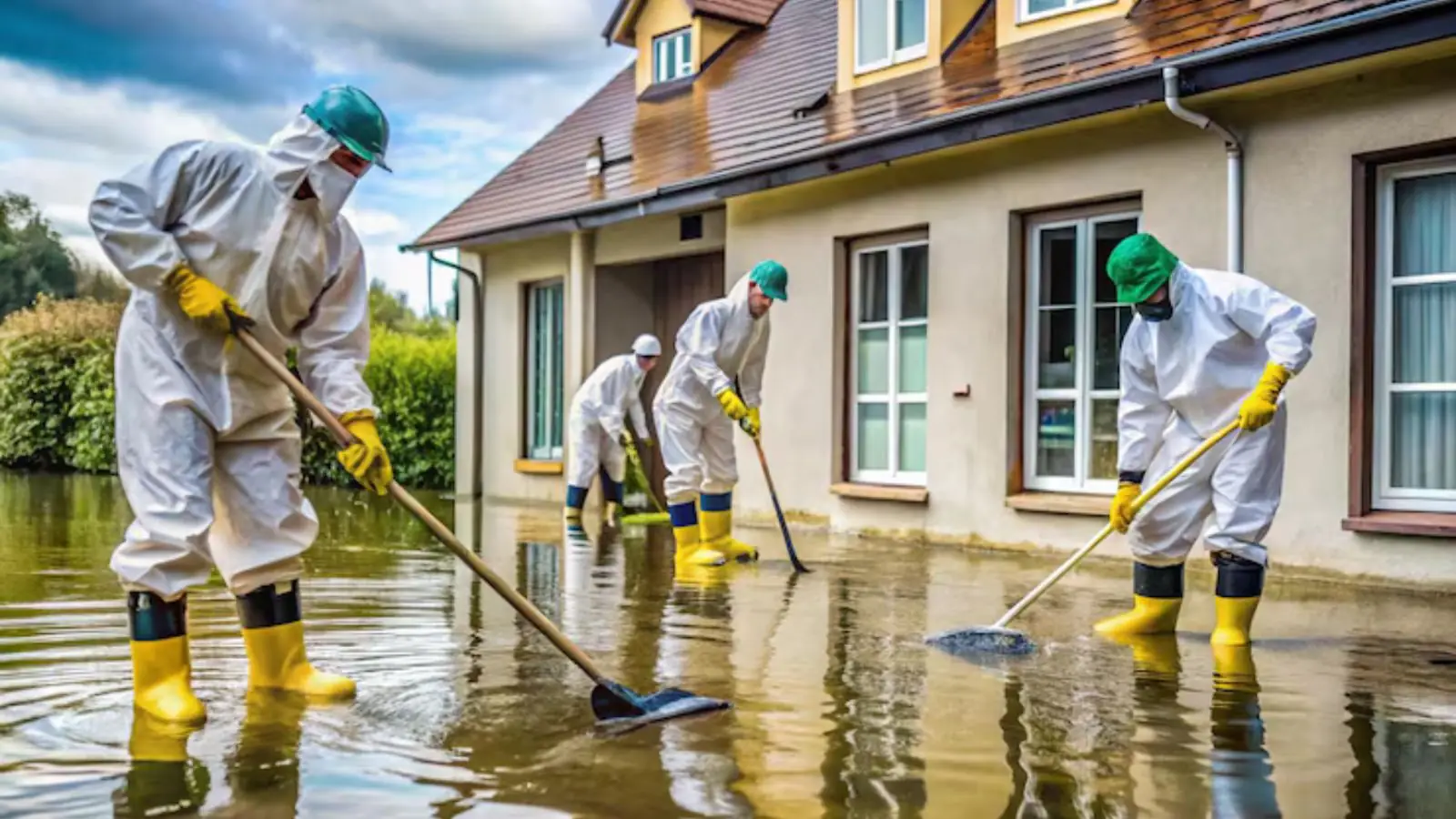
Flood damage restoration deals with water that came from outside the plumbing system: storm runoff, rising creeks, overwhelmed drains and groundwater pushing through foundations. In Littleton, CO, that water is treated as contaminated, because it has crossed soil, yards and roads before it reached your home. The work is extraction, removal of soaked materials, cleaning and sanitizing, and structural drying.
Call our 24/7 line if floodwater is in your home. Stay out of standing water, turn off power only if you can reach the panel on dry ground, and do not run appliances that were underwater.
When flood water in the house is an emergency
Floodwater is always an emergency, because it brings contamination and it keeps seeping into porous materials. Every hour it sits, carpet, pad, drywall and insulation take on more of it, and the choice shifts from drying to discarding.
Electricity and flood water are a dangerous mix. If outlets, a furnace, a water heater or a panel are in or near the water, stay out and call 911 or your utility before you call us.
Safety first when floodwater is inside
Do not walk through flooded rooms barefoot, and do not eat food that touched floodwater. If the water is rising or the house smells of gas, leave and call 911. We can talk you through what to protect once everyone is safe.
Basement flooding cleanup
Basements flood first because they sit below grade and collect runoff and groundwater. A finished basement adds drywall, insulation, carpet and cabinets that all absorb water, so the cleanup list is longer than for a bare concrete floor.
The work goes in order: remove the standing water, pull soaked carpet, pad and the lower section of wet drywall, clean and sanitize the slab and framing, and set equipment to dry what stays. Concrete holds water longer than most people expect, so drying is checked with moisture readings instead of by feel.
Once the basement is dry, the leftover cleanup is the same sorting and sanitizing described under water damage cleanup, and we can tell you what we saw about how water entered. We do not waterproof, but a drainage or waterproofing contractor can use that information to fix the entry point.
Sewage backup cleanup after flooding
Heavy rain can overload sewers and push waste water back up floor drains. This is Category 3 water, and it requires containment of the affected area, removal of porous materials it touched, and sanitizing of everything that stays. Cleaning products from a hardware store do not make sewage-soaked drywall or carpet safe again.
If sewage is coming from the main line, the blockage is the city or your sanitation district's to clear. The City of Littleton's utility line for sewer emergencies is 303-795-3959 on weekdays and 303-794-1551 after hours. Our crew handles the contaminated cleanup inside your home once the source is addressed.
| Category | Common source | Typical response |
|---|---|---|
| Category 1 | Clean supply water | Extract and dry, many materials can stay |
| Category 2 | Appliance discharge, some surface water | Extract, clean, sanitize, remove porous items that sat wet |
| Category 3 | Sewage, creek water, groundwater flood | Containment, removal of porous materials, sanitize, dry |
Flood risk in Littleton: the creeks and the 1965 flood
The South Platte River reached Littleton on June 16, 1965, at about 110,000 cubic feet per second, according to the Littleton Museum's history of the flood. The city lost about 80 homes and 72 trailers, and Chatfield Dam was built from 1967 to 1975 in response. A dam upstream lowers the risk but does not remove it, and storm runoff in smaller drainages still floods streets and window wells.
The 1978 FEMA Flood Insurance Study for the city lists Big Dry Creek, Lee Gulch and Slaughterhouse Gulch as flooding sources. The city regulates both FEMA and local floodplains and requires a Floodplain Development Permit for work in them. Call the city's floodplain administrator in Public Works at 303-795-3863 to learn whether your address is in one, and check the FEMA flood map for your address.
The Colorado Geological Survey adds a ground-level factor. Expansive clay soils are common where most Coloradans live, they start expanding when wet, and poor drainage around a house is a frequent problem. Cracked basement slabs are among the signs. If water keeps coming into your basement, drainage around the house is worth a look.
Flood insurance: what to check before you need it
FEMA's flood insurance program notes that most homeowners insurance policies do not cover flood damage, and that a flood policy typically has a 30 day waiting period before it takes effect. The Colorado Division of Insurance says the same about most property policies and advises starting a claim as soon as you can.
Read your policy now and ask your insurer what counts as flood and what counts as sudden and accidental water. We document the damage with photos and moisture readings so the record is ready.
Water coming in from outside? Call the 24/7 line and tell us what you see.
Call (303) 952-8295What affects the cost of flood restoration
- Water category, since Category 3 water requires more removal and more protective steps.
- Depth of the water and square footage affected.
- Finished or unfinished basement, and the materials in it.
- Drying time and the amount of equipment needed.
- The rebuild scope after drying, such as drywall, flooring and cabinetry.
We explain scope and price before work starts. Mold that follows a flood is covered on the mold remediation page. Our crews also work in Englewood, where the Platte corridor and older drainage keep flood restoration on the call list, and we hand the rebuild to water damage repair once the structure is dry.
Common questions
Yes. Dispatch answers every hour of every day. Flood calls at night or on weekends get the same response as weekday calls.
Yes. Floodwater from storms, creeks and groundwater is treated as Category 3, which means contamination controls and removal of porous materials that sat in it.
Check the FEMA flood map for your address and ask the City of Littleton's floodplain administrator in Public Works. Local floodplains are regulated the same way as FEMA ones.
Most homeowners policies do not, according to FEMA and the Colorado Division of Insurance. Flood needs its own policy, and a typical policy has a 30 day waiting period. Ask your insurer.
No. We restore after flooding, and waterproofing is a different trade. We can share what we observed about the entry point with a drainage contractor.