Why the order of the steps matters
Water damage remediation steps in Littleton, CO follow a sequence for a reason. Pull wet carpet before you stop the leak and you are mopping a running tap. Dry before you map the moisture and you may leave a wet wall behind to grow mold.
The sequence below reflects common practice under the ANSI/IICRC S500 standard. Ask any company you call whether its crews work to it.
Step one: safety before anything else
Water and electricity are a bad mix. If water is near outlets, a panel or running appliances, shut off power to that area from the breaker, and only if the breaker is dry and you can reach it safely. If you cannot, stay out and call for help.
Watch for slippery floors, sagging ceilings and anything that looks like sewage. Contaminated water needs gloves, boots and eye protection at minimum, and children and pets should stay away.
Step two: stop the source
Find the shut-off and close it. For a burst supply line that may be a fixture valve, and for something bigger it is the main. Fixing the plumbing itself is a plumber's job, but stopping the flow is yours.
If the source is rain, a roof leak or a sewer backup, the fix is different, and our emergency water removal crews can start extraction while you arrange the repair of the cause.
Step three: assessment and moisture mapping
Before any equipment goes down, the crew inspects and measures. Moisture meters read wood and drywall, and thermal imaging can show cold, wet areas behind finishes. The readings are recorded as a baseline.
The goal is a map of what is wet, how far it reached and what category of water you have. That map drives every later decision, from what comes out to how many air movers are placed.
| Stage | What happens | How you know it is done |
|---|---|---|
| Safety | Power, hazards and contamination checked | Work area is safe to enter |
| Source stop | Water supply or cause is shut off | No new water arriving |
| Moisture mapping | Meters and imaging record wet areas | Written baseline readings |
| Extraction | Standing and pooled water removed | No visible standing water |
| Drying | Air movers and dehumidifiers run | Readings reach dry targets |
| Cleaning | Surfaces cleaned and treated as needed | Affected areas visibly clean |
| Monitoring | Daily rechecks of readings | Equipment removed on target |
| Rebuild | Replace removed finishes | Walls, floors and trim restored |
Step four: extraction
Standing water comes out first, using pumps and extractors. Removing a gallon by machine is far faster than letting an air mover evaporate it. Wet carpet can sometimes be lifted and extracted, and wet pad is often discarded.
Anything that cannot be saved is removed at this stage. That includes saturated insulation, swollen particleboard and drywall that was soaked by dirty water.
The first day matters most
Mold needs moisture and can begin to grow in roughly 24 to 48 hours in damp conditions. That does not mean a house is ruined at hour 25, but it is why we dispatch day or night and start extraction first.
Step five: structural drying
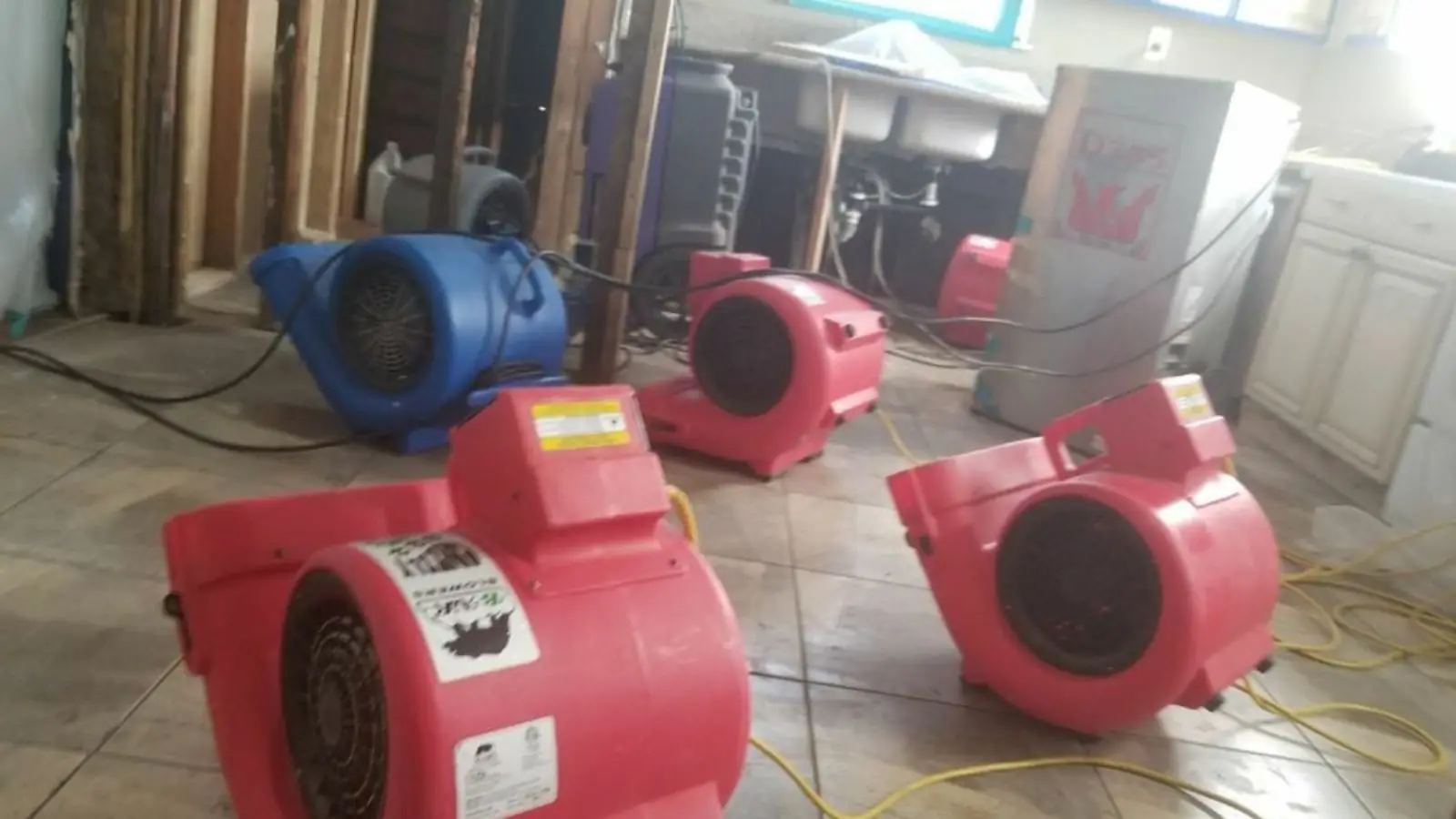
Air movers push dry air across wet surfaces, and dehumidifiers pull the moisture out of the air. Wall cavities may be opened or vented so air reaches the wet side. This stage usually takes several days.
A common industry goal is indoor relative humidity under 60 percent. Drying too fast can warp wood, so crews balance speed against material.
Water still coming in or standing in a room? Call (303) 952-8295 and we will dispatch right away.
Call (303) 952-8295Step six: cleaning and treating surfaces
Once water is out, surfaces that stayed in place are cleaned. Contaminated losses get more attention, including antimicrobial treatment where appropriate. Soft contents such as upholstery may need professional cleaning or disposal.
If you already see mold, say so. Remediation and testing for mold follow the S520 standard, and any health question belongs with a physician.
Step seven: monitoring until it is dry
The crew returns each day to take readings and move equipment. This is the step homeowners skip in their minds, yet it is what proves the job is finished. Equipment stays until readings match the dry baseline for that material.
Our water mitigation visits include these checks, and the readings are what your insurer may ask to see.
What you can do while the crew works
Keep a simple log. Photograph the damage before and after removal, list what was discarded and keep receipts for any emergency purchases. Sudden and accidental water damage is often covered by homeowners policies, so check your policy and ask your insurer what documents it wants.
Stay out of rooms with equipment running, and do not move or unplug air movers. If a machine stops or a reading looks off, tell the crew on the next visit.
Step eight: rebuild
After drying, removed materials get replaced. That means drywall, insulation, paint, trim and flooring. Rebuild is a separate scope from mitigation, so it can wait for an adjuster or your own schedule.
We do not do waterproofing or foundation repair. If the water came from poor drainage or a cracked foundation, that will need another trade.
Littleton, CO: sewer emergencies and permits
If the water is sewage, the City of Littleton handles sewer emergencies and maintenance. The number is 303-795-3959 on weekdays from 8 to 4 and 303-794-1551 after hours. A main line backup is a utility call first, and some addresses are served by other sanitation districts that the city bills, so confirm which district serves you before you call.
The City of Littleton Permit Center at 2255 W. Berry Ave, 303-795-3751, says a permit is required to install, alter, repair or replace any electrical, gas, mechanical or plumbing system. Its page does not mention water damage specifically, so ask the center whether your rebuild touches one of those systems and whether a Homeowner Affidavit applies.
Sources: City of Littleton Utilities page, City of Littleton Permit Center page.
Our crews also work in Englewood and Lone Tree, and the sequence is the same in every home.
Common questions
Make the area safe and stop the water at the shut-off if you can reach it safely. Move valuables out of the wet area and take photos for your insurer. Leave extraction and drying to the crew.
Usually several days. The exact number depends on materials, water category and humidity, and the crew confirms it with daily readings.
Wet insulation and trapped air in a cavity will not dry on its own. Small openings let air reach the wet side, and badly soaked material is removed.
No. We set, monitor and remove the equipment as part of the job, because readings decide when to move or stop it.
The City of Littleton handles sewer emergencies, and a main line backup is a utility call first. Use 303-795-3959 on weekdays from 8 to 4 or 303-794-1551 after hours, then call us for the cleanup.