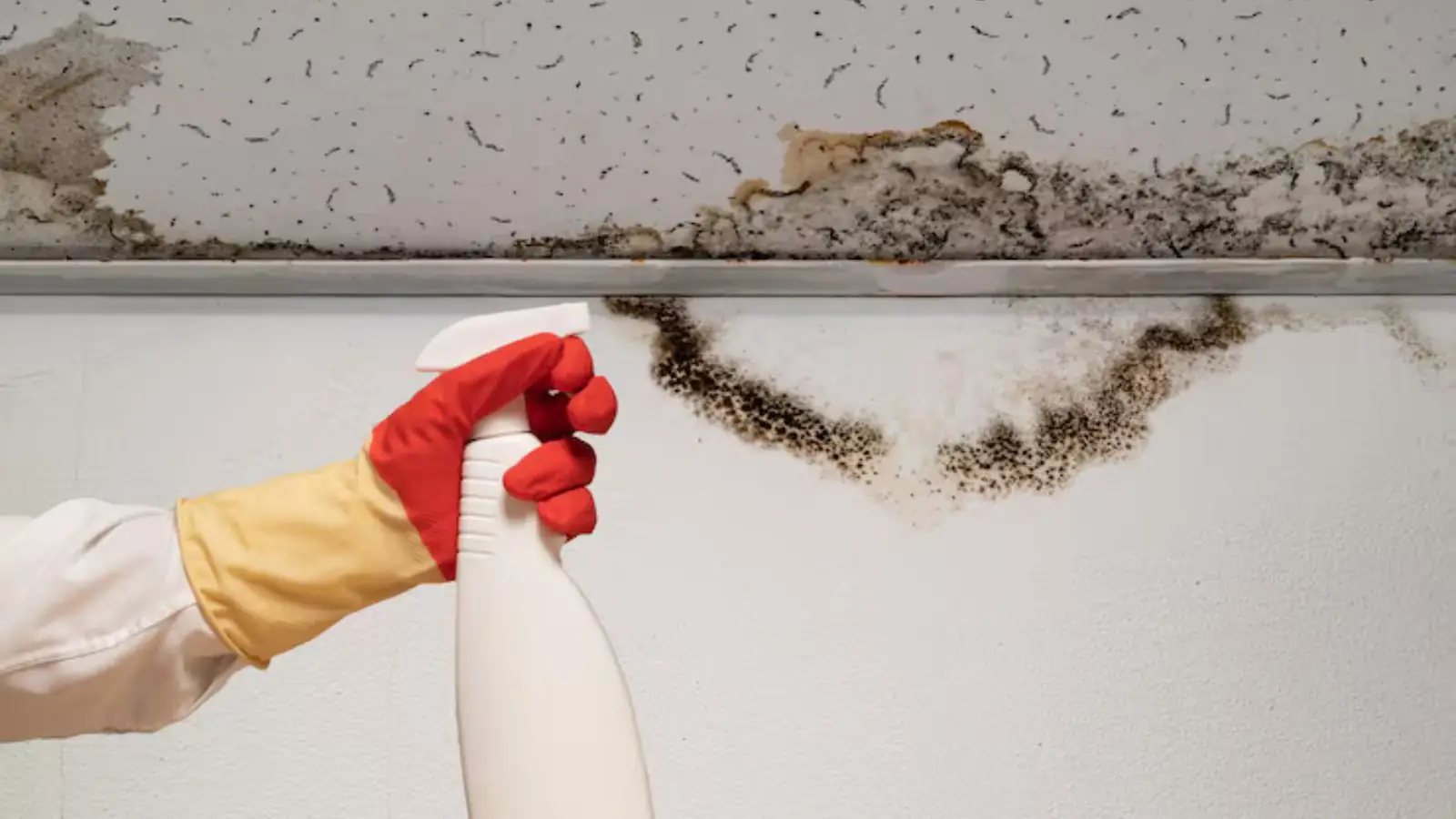
Start by asking what is wet above the ceiling
If you want to know how to remove mold from a ceiling, the first step is not scrubbing. It is working out what feeds it. A bathroom fan that vents into the attic, a roof leak, a leaking upstairs supply line or drain, and ice-dam melt can all keep a ceiling damp.
Mold only grows where moisture lingers. Clean the stain and leave the leak, and the spots return.
Three situations, three answers
| Situation | What it looks like | Reasonable next step |
|---|---|---|
| Surface patch | Small spots in a bathroom corner, ceiling is firm and dry | Fix humidity, clean carefully with protection |
| Active leak | Stain spreading, drywall soft, sagging or dripping | Stop the leak, dry the cavity, then remove damaged board |
| Large or hidden | Big area, repeat growth, or growth on both sides of the board | Professional containment and removal |
A rough guide used by many industry resources is that a patch about the size of a few square feet can be a homeowner job, and anything beyond that deserves a professional look. Treat that as a starting point, not a rule. Porous, wet or crumbling ceiling material changes the answer no matter the size.
Safety before any scrubbing
- Wear an N95 or better respirator, gloves and eye protection that seals
- Close the room and cover the floor with plastic sheeting
- Turn off the HVAC so spores do not travel through the ducts
- Never mix bleach with ammonia or other cleaners
- Stop if you find the board soft, wet or growing past the patch
We do not make health claims, and anyone with breathing or immune concerns should ask a physician before doing this work themselves. Handing it to a professional is a perfectly good choice.
Do not paint over it
Primer and paint do not kill active growth and they hide the warning sign. The stain can bleed through, and the hidden moisture keeps working on the board behind it.
Cleaning a small surface patch
- Fix the source: repair the leak or correct the venting first.
- Lightly mist the patch so spores do not lift into the air.
- Wipe with a damp cloth and detergent solution, working from the edge inward.
- Bag the cloths, and discard them outside the home.
- Dry the ceiling fully with a dehumidifier and watch it for a few weeks.
If stains remain after cleaning, that is usually staining and not live growth, but a soft or flaking area means the material is compromised. At that point replacement of the board is the cleaner fix.
Ceiling growth bigger than your hand or still wet? Call (303) 952-8295 and we will explain scope and price before work starts.
Call (303) 952-8295When a pro job is the right call
Once removal means cutting ceiling drywall, the job creates dust and spores overhead, which is hard to control in a living space. Professional mold remediation uses containment, air filtration with negative pressure, and HEPA cleanup as described in ANSI/IICRC S520, the published mold remediation standard.
If the ceiling got wet from a plumbing or roof leak, there is probably wet insulation too. That is water damage repair territory, and drying the cavity is as important as removing the board.
Who does what: hiring and permits
Colorado DORA's consumer page notes that not all occupations are licensed, with roofers and general contractors as examples. The City of Littleton requires a contractor license or registration certificate to pull permits, in classes A, B, C and trade classes, along with proof of liability insurance. We cannot say whether your state licenses mold work, so ask that question directly when you hire.
A roofer repairs the roof, a plumber repairs the pipe, and the mold company removes the growth. Hire them in that order and ask each for its Littleton license if a permit is involved.
Littleton, CO: a snowy metro and ceiling leaks
NWS Boulder lists Denver's 1991 to 2020 normal annual precipitation at 14.48 inches and normal seasonal snowfall at 49.0 inches at Central Park, and says the western and southwestern Denver suburbs average about 65 to 70 inches of snow a season. Those are metro numbers, not Littleton readings. Tie-back: in a snowy season, check the attic and the ceilings below it after each big melt, because ice dams push meltwater under shingles and into ceilings.
Sources: NWS Boulder annual summary and seasonal snowfall pages, Colorado DORA consumer page, City of Littleton licensing requirements.
Common ceiling culprits and quick checks
- Bathroom: confirm the exhaust fan moves air and ducts outside, not into the attic
- Top floor: look for brown rings that grow after rain or snowmelt
- Below a bathroom: check for drips at the tub drain, toilet flange or shower valve
- Kitchen: look for staining below a dishwasher or sink line
- Attic: inspect for damp insulation, dark roof decking or crushed vents
Press gently on the stained area with a gloved hand. Firm and dry is a better sign than soft, cool or sagging. Mark the edge of any stain in pencil with the date, so you can tell whether it is growing.
After the cleanup
Keep indoor humidity under about 60 percent and run bathroom fans during and after showers, venting outdoors. Look at the ceiling again in two to four weeks. If the stain comes back, the moisture source is still active, and the next step is a closer look above the board, not a stronger cleaner. A thermal camera or moisture meter in a professional's hands can trace the damp path without opening more than needed.
We also take calls from Morrison and Englewood homeowners who find ceiling growth after a heavy snow season. We dispatch 24/7.
Common questions
A detergent solution on a hard, sealed surface is often enough for small patches. Bleach is not recommended on porous drywall because it does not reach into the material. Never mix cleaners.
Many resources use about a few square feet as a rough line, but soft drywall, active leaks or hidden growth mean call a professional sooner. When in doubt, have it looked at.
It can if done without containment. Cutting and pulling board releases dust and spores, which is why professionals seal the area and filter the air.
Depends on the work. Plumbing, electrical and other system repairs need a permit in Littleton, and the city requires a license or registration to pull one. Ask your contractor and the city permit staff.
Winter snow loads and spring melt can send water under shingles. Check the attic for damp insulation or dark roof decking after thaws, and ask a roofer about ice dams and attic ventilation before you clean the ceiling.