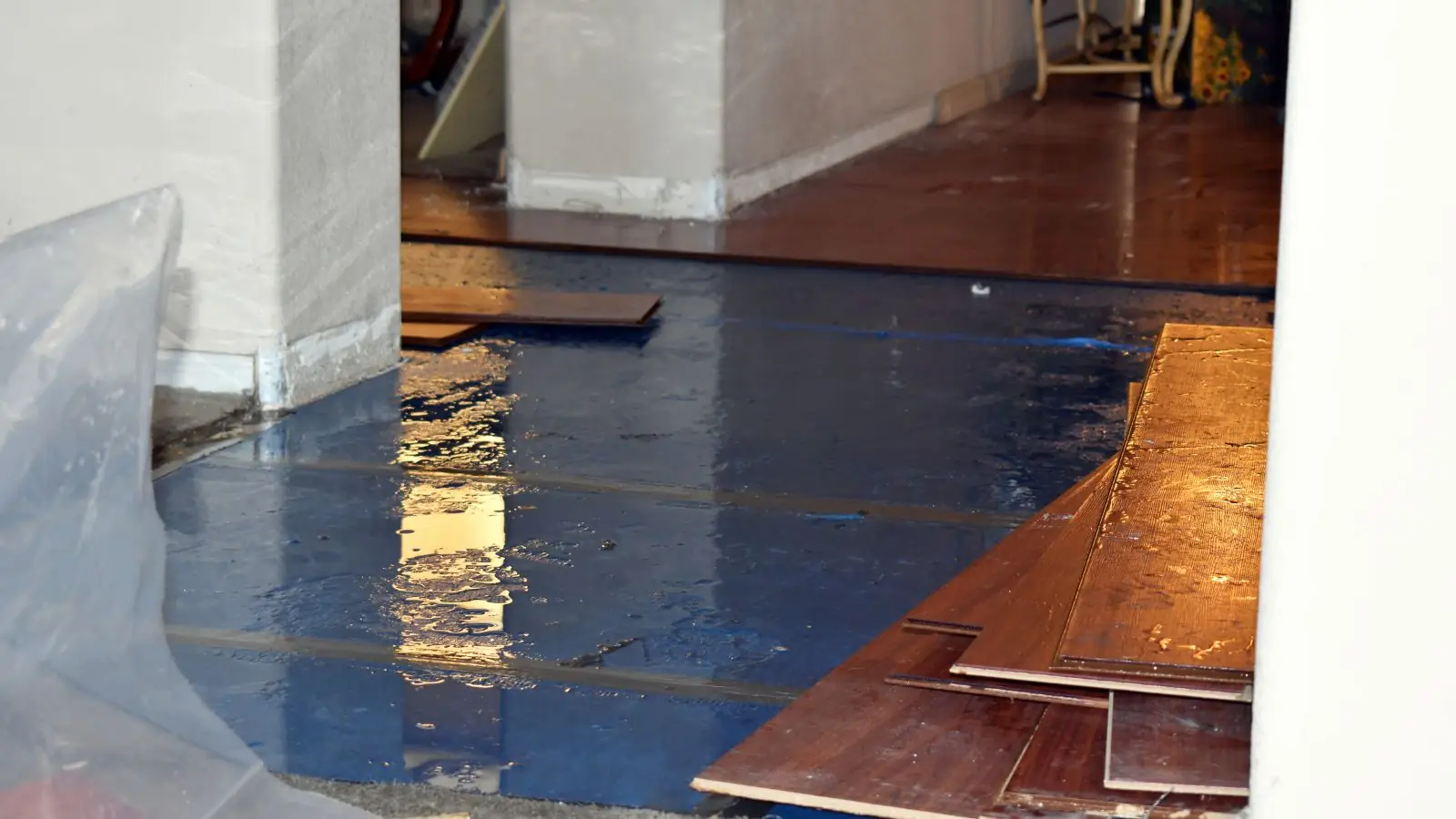
Why wood is both tough and fragile
You can fix water damage on wood in Littleton, CO more often than most people expect, but the answer depends on the species, the finish and how long it stayed wet. Solid lumber swells and then shrinks back. Engineered boards and particleboard swell and often stay swollen.
This article covers wood that is not a floor: trim, cabinets, furniture, framing and subfloor. The goal is a quick sorting method so you know what to dry, what to refinish and what to replace.
First hours: get air moving
Remove standing water, take drawers and doors out of cabinets, and pull baseboard if it is wet behind. Open the space so air can reach back sides and ends where moisture sits. A fan and a dehumidifier help, but moisture readings are what confirm progress.
Wipe off any dirty water residue. Do not use a heat gun or hot air on wood, because quick drying warps it and cracks finishes.
Trim and baseboards
Painted trim made of solid wood often survives a short wetting. Pry it gently, dry both sides, check the wall behind and reinstall or repaint. Finger-jointed or MDF trim tends to swell at the bottom edge and does not recover.
Because trim is cheap and easy to replace, replace it when it has swollen, split or soaked up dirty water. Save the drying effort for things that are hard to replace.
Cabinets, vanities and furniture
Plywood and solid wood cabinet boxes can often be dried and kept. Particleboard cabinets with laminate faces usually cannot, since the core swells and crumbles, and the laminate lifts. Vanity bases under a leaking sink are the most common casualty.
For furniture, solid wood pieces can dry and be refinished. Veneer lifts and glue joints fail, so antiques and valued pieces are worth a conservator's opinion before you try to fix them yourself.
| Wood item | Usually dries and stays | Usually replace |
|---|---|---|
| Solid wood trim | Short wetting, clean water | Split, warped or long wet |
| MDF or finger-jointed trim | Rarely | Swollen bottom edge |
| Plywood cabinet box | Clean water, caught early | Delaminated layers |
| Particleboard cabinet | Rarely | Swollen, crumbly core |
| Solid wood furniture | Dried slowly, refinished | Cracked or moldy |
| Framing lumber | Almost always, if dried | Rot or structural softness |
| Plywood or OSB subfloor | Brief wetting, then dried | Delaminated, soft or stained long term |
Do not seal wood too early
Paint, varnish or flooring over wood that still reads wet traps the moisture. Wait for the meter to show the wood has reached a normal dry level before you finish it.
Framing and subfloor
Framing lumber is thick and dense, so it holds water longer but also tolerates it. Properly dried studs and joists are normally kept. The concern is time: wood that stays wet for a long stretch can develop rot and mold.
Subfloor is a mixed case. Plywood subfloor that was wet briefly often dries. Oriented strand board swells at the edges and can lose strength, so softness or delamination points toward cutting out the section.
Not sure if the wood in your house can be saved? Call (303) 952-8295 and we will explain what to dry and what to replace.
Call (303) 952-8295Drying methods that work on wood
Wood dries best slowly and with controlled air movement. Dehumidifiers pull moisture from the air while air movers lift it from surfaces. For wall cavities and cabinet toe-kicks, small holes or removed panels let air reach hidden wood.
Our water mitigation crews monitor readings day to day, and drying commonly takes several days. A common target is under 60 percent relative humidity in the room.
Refinishing and rebuilding
Once dry, surface staining can be sanded and refinished. Deep black staining, soft spots and fungus growth call for replacement, and mold questions follow the S520 standard, with health questions going to a physician.
Match matters. A replaced cabinet face or trim run has to be colored to blend, and our water damage repair team handles that along with the carpentry.
A quick triage for furniture and keepsakes
Move wet furniture off wet carpet right away and set the legs on foil or plastic so they do not stain. Pull out drawers and open doors so air reaches the inside. Keep pieces out of direct sun and away from heaters, which cause cracks.
If a piece has sentimental or collectible value, take photos and stop. A refinisher or conservator can often do more with a piece that has been dried slowly than with one someone sanded wet.
Choosing who does the carpentry
Colorado DORA's consumer page notes that not all occupations are licensed, with roofers and general contractors as examples. In Littleton, the city requires a contractor license or registration certificate to pull permits, plus proof of liability insurance. Ask any contractor for its Littleton license when permits are involved.
Most wood repair on trim and cabinets needs no permit, but framing changes or plumbing and electrical work may.
Littleton, CO: older buildings and historic districts
Littleton has designated historic districts, including the Downtown Littleton Historic District (city designation, 2021), the Littleton Main Street District (National Register, 1998), Louthan Heights (city, 2002) and Arapaho Hills (National Register, 2012). Older buildings often have original wood floors, plaster or older plumbing, so wood in these homes may be worth saving instead of replacing. Before changing a designated building's exterior, ask the city's historic preservation staff.
In practice this means photographing original wood before anything is removed and telling the crew it is original. We will favor slower drying over tear-out when the wood is sound.
Sources: City of Littleton historic preservation pages, National Register listings.
We also serve Lone Tree and Denver, where the same sorting rules apply.
Common questions
Solid wood often shrinks back as it dries slowly, though the finish may crack. Particleboard and MDF generally stay swollen.
No. Fast, hot drying causes warping and cracking. Use air movement and dehumidification and check with a moisture meter.
There is no exact clock, because it depends on temperature, species and the water. Mold can begin in roughly 24 to 48 hours in damp conditions, and long wet exposure raises the rot risk.
Plywood subfloor wet briefly often dries and stays. Soft, delaminated or long-wet subfloor should be cut out and replaced.
Original wood is often worth drying first. Tell the crew it is original, photograph it, and ask the city's historic preservation staff before changing a designated building's exterior.