Why no two water losses cost the same
Homeowners often ask for the cost to repair water damage in Littleton, CO before anyone has seen the house. It is a fair question, but the honest answer is that a spill from a dishwasher hose and a slow leak behind a shower wall can sit in the same ZIP code and land far apart. The price follows the conditions on site, not the address.
This article lists the factors that move the number. We are leaving dollar figures out on purpose, because a figure printed on a web page cannot know your water source, your flooring or how long the water sat.
Water category sets the starting point
Water is sorted into three categories in the ANSI/IICRC S500 standard. Category 1 comes from a clean source such as a supply line. Category 2 carries some contamination, for example a washing machine discharge. Category 3 is grossly contaminated, such as sewage or river water.
A higher category means more protective gear, more material removal and more cleaning steps. Clean water can sometimes be dried and saved. Category 3 water usually means porous materials like carpet, pad and wet drywall come out, which changes the whole job.
Category can also worsen with time. Clean water that sits for a day or two in a warm room can slide toward a higher category as bacteria grow. That is one reason early action tends to keep a job smaller. Our water damage cleanup crews note the category in the scope so you can see why a step is there.
Square footage and how far the water spread
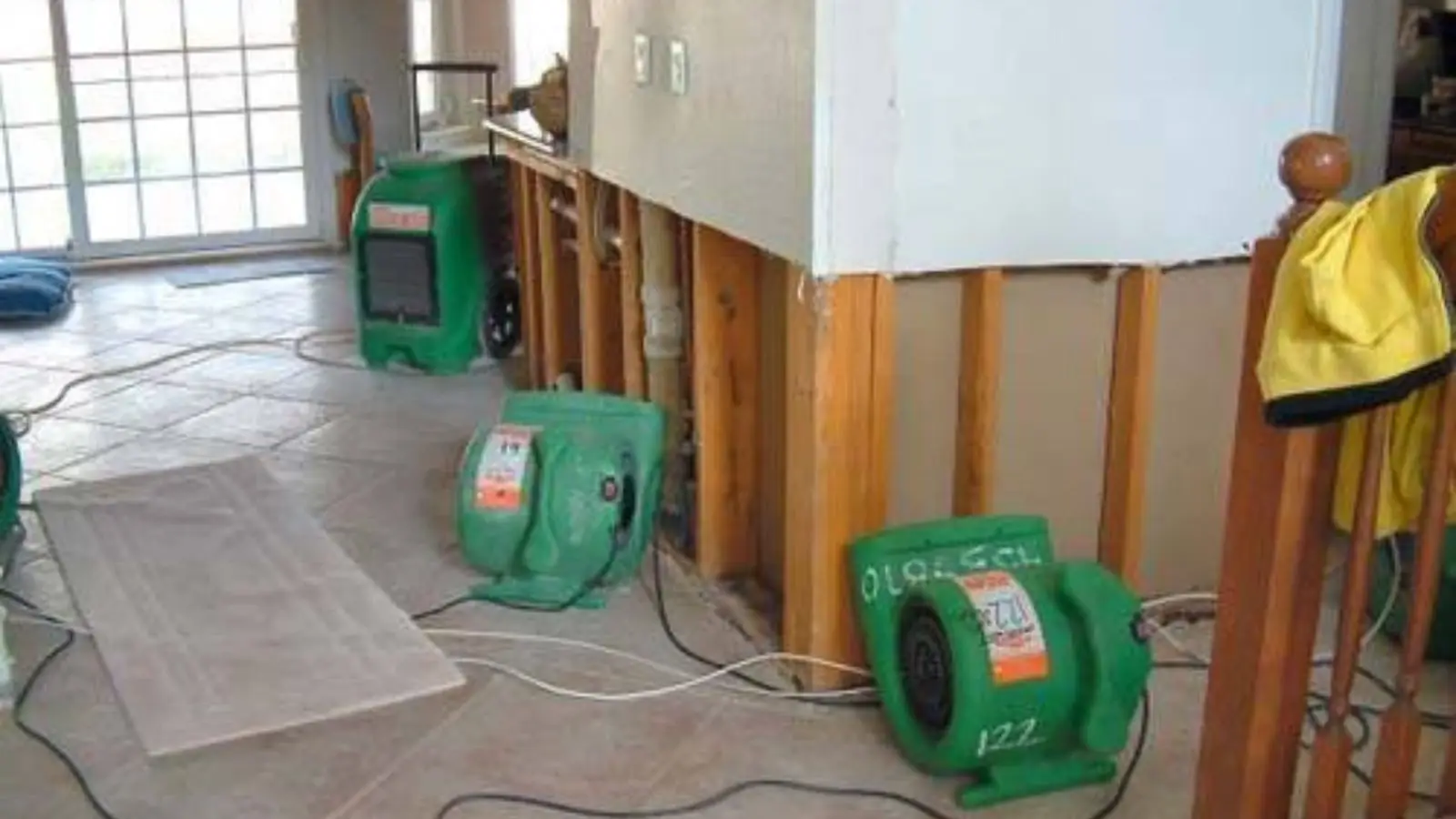
Wet area drives labor, equipment count and drying time. Water also travels, so the visible puddle is rarely the whole story. It wicks up drywall, runs under baseboards and soaks into subfloor and the framing below.
That is why the crew takes moisture readings before quoting the scope. A kitchen that looks like one wet room may have damp walls in the hallway behind it. Readings turn a guess into a list of wet areas.
Materials decide what can be saved
Hard, dense materials like tile, concrete and solid framing tolerate water well and usually dry in place. Soft, porous ones like insulation, carpet pad and particleboard cabinets often do not. Once they swell or hold dirty water, replacement is cheaper and safer than drying.
Finish quality matters too. Replacing a section of standard drywall is a different line item from matching custom millwork or a tile pattern that is no longer sold.
| Factor | Pushes scope down when | Pushes scope up when |
|---|---|---|
| Water category | Clean supply line water, caught early | Sewage, river or long-standing water |
| Wet area | One room, readings stop at the wall | Several rooms, wicking into walls and subfloor |
| Materials | Tile, concrete, solid wood that can dry | Insulation, pad, particleboard, plaster |
| Drying time | Fast action, open air flow | Humid weather, closed spaces, delay |
| Rebuild | Patch and paint | New drywall, cabinets, flooring, trim |
| Permits | No regulated system touched | Plumbing, electrical or gas work involved |
Drying days and the equipment behind them
Structural drying usually takes several days, and the crew checks readings daily to decide when it is done. More wet material means more air movers and dehumidifiers running for longer. Thick materials such as hardwood framing or concrete slabs hold moisture the longest.
A common industry target is to bring indoor relative humidity under 60 percent, since mold needs moisture to grow. Equipment is not rented to homeowners in our case, so the crew sets it, monitors it and removes it.
Ask what the number includes
A clear scope separates emergency labor, equipment days, removal and disposal, cleaning and any rebuild. If one lump sum covers all of it, ask for the pieces. You are entitled to understand each step before it starts.
Rebuild scope is its own project
Drying a house and putting it back are two different jobs. Rebuild covers new drywall, texture, paint, trim, flooring and cabinets. The finish level you pick, from builder grade to custom, often moves the total more than the water itself did.
Some owners dry first and decide on the rebuild later, especially when an insurance adjuster is involved. That is a sensible order. Our water damage repair work can follow the drying phase when you are ready.
Want the scope and price explained before any work starts? Call (303) 952-8295 and we will dispatch day or night.
Call (303) 952-8295Permits and who may pull them
Permits come into play when repairs touch regulated systems. Replacing a damaged water heater line, rewiring a flooded outlet run or moving gas piping can all call for one. A permit adds fees and sometimes an inspection step, so it belongs in the cost picture.
We do not do waterproofing or foundation repair. If a leak traces back to drainage or a cracked foundation, that is a separate trade and a separate bill.
Mitigation versus repair: two invoices
Mitigation is the emergency phase: stopping damage from spreading, extracting water, tearing out what cannot be saved and drying. Repair is the rebuild. Many insurers and many owners treat them as two budgets, and it helps to keep the paperwork separate.
Mitigation costs tend to be driven by hours, equipment days and disposal. Repair costs tend to be driven by materials and trade labor. Knowing which line belongs to which phase makes it easier to compare bids.
Littleton, CO: who is allowed to do the work
The Colorado DORA consumer page notes that not every occupation is licensed, and it names roofers and general contractors as examples. The City of Littleton, however, requires a contractor license or registration certificate to pull permits, in classes A, B, C and several trade classes, along with proof of liability insurance. Before you accept a bid that needs a permit, ask the contractor for its Littleton license and a copy of that insurance.
Census QuickFacts lists Littleton at 46,246 residents in its 2025 estimate, with 61.2 percent of homes owner-occupied. That means most Littleton water losses land on someone who will pay for the repair directly or through their own policy, so it pays to read the scope line by line.
Sources: Colorado DORA consumer page, City of Littleton contractor licensing pages, U.S. Census Bureau QuickFacts.
Getting a price you can compare
- Ask for water category, affected rooms and moisture readings in writing.
- Ask how many equipment days are planned and how drying will be confirmed.
- Ask which materials come out and which stay, and why.
- Ask whether any permit is expected and who will pull it.
- Ask where mitigation ends and rebuild begins.
We also dispatch to Denver and Morrison for the same kinds of losses, and the factors above apply the same way. The difference is always on site, not on a rate card.
Common questions
Not honestly. We can explain the factors and what a typical sequence looks like, but price depends on water category, wet area and materials, which need to be seen and measured. We explain scope and price before work starts.
Usually, because contaminated water means more removal, more cleaning and more protective steps. Clean water caught early may dry in place with little tear-out.
Wet materials release moisture slowly. The crew checks readings daily and removes equipment only when materials reach their dry targets.
Yes. Mitigation stops the spread and dries the structure. The rebuild replaces finishes. Keeping them as separate scopes makes bids easier to compare, and your insurer may want them separated.
Ask for the contractor's City of Littleton license or registration certificate and proof of liability insurance, which the city requires for permits. Not every trade is licensed at the state level, so the city requirement is the one to verify.