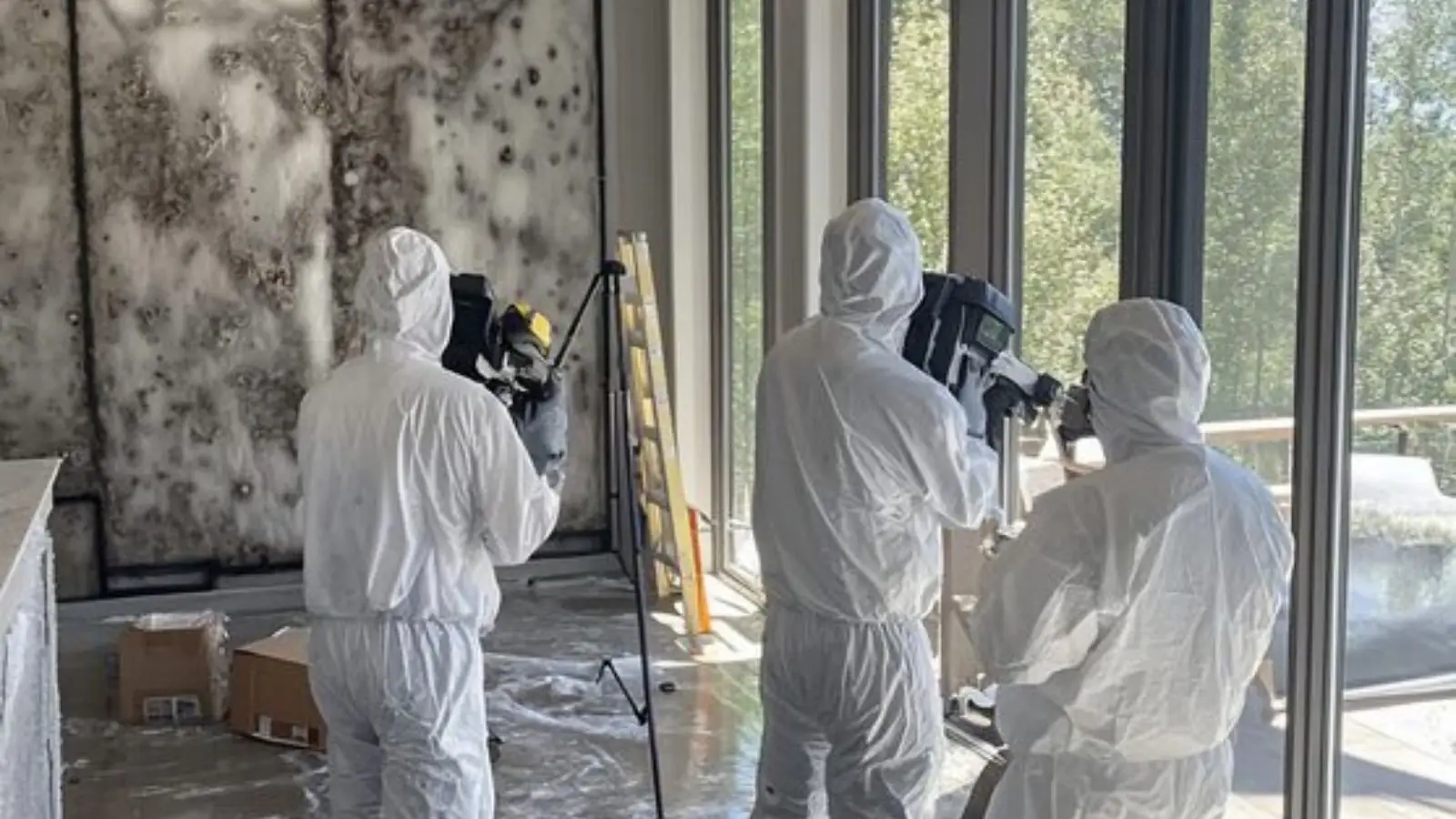
Why commercial mold removal is a different job
Commercial mold removal usually involves more people, more rules and more money tied up in downtime than a house does. A restaurant loses sales, an office loses working hours, and a multi-unit building has tenants whose rights and schedules are not yours to decide alone.
The technical work follows the same published standard, ANSI/IICRC S520, but the planning around it is heavier. The earlier that planning starts, the shorter the disruption.
Scoping the building before anyone cuts a wall
A commercial scope starts with finding the moisture source, mapping affected areas and noting what the building uses for air handling. Shared ductwork, rooftop units and plenum ceilings can connect spaces that look separate. That affects where containment goes and what must be shut off.
Expect questions about the building age, past leaks, roof or plumbing work, and whether tenants have reported odors. Records of previous water events save hours.
| Building type | Main concern | Planning point |
|---|---|---|
| Office | Shared air handling, working hours | Phase work by suite or floor, often after hours |
| Retail | Customer access, stock and fixtures | Decide what stock moves and when to reopen the sales floor |
| Restaurant | Kitchen moisture, health inspections | Coordinate closures and food storage with the owner |
| Multi-unit building | Tenants, lease terms, shared walls | Notice, access and who pays should be settled in writing |
| Mixed-use or historic | Older materials, designated status | Check with the city before altering exteriors |
Containment in occupied space
When a building stays open, containment is what keeps the work separate from everyone else. Crews build sealed barriers, run negative air machines with HEPA filtration, and control foot traffic in and out of the work zone. Doors, elevators and loading areas are mapped in advance.
Our mold remediation crews explain the scope and price before work starts, and noisy or dusty steps can often be scheduled for off hours.
Keep the HVAC in the plan
If the air handler serves both clean and affected areas, tell the crew first. Running it during removal can move material around the building, and the decision to shut down a zone should be made on purpose, not by accident.
Mold in a shop, office or building you manage? Call (303) 952-8295 for a scoping conversation with a dispatcher, available at any hour.
Call (303) 952-8295Tenants, landlords and who handles what
Leases decide a lot, including who repairs the building envelope, who pays for tenant improvements, and how much notice a landlord owes before entry. Read the lease before you assume either side owns the problem. Property managers should get written scope documents early so each party sees the same plan.
Insurance questions belong in the same conversation. Sudden and accidental water damage is often covered under commercial property policies, while long-term seepage often is not, so ask your insurer before you start repairs.
Documentation that protects everyone
Keep dated photos, moisture readings, scope documents, work logs and any testing results in one folder. These matter to insurers, to tenants and landlords, and to the next buyer or lender. Clearance testing by an independent party, where requested, closes the file.
The crew should also record how the moisture source was fixed. A remediation report without a water fix is only half a record.
Permits and downtime
If removal involves electrical, gas, mechanical or plumbing work, ask whether a permit is needed. Downtime then depends on the size of the affected area, drying time, and whether other trades must finish before reopening. Drying usually takes several days, and that part cannot be rushed without risking a repeat.
For leaks that began as a flood event, flood damage restoration may be part of the same scope.
Littleton, CO: permits and older buildings
The City of Littleton Permit Center, at Littleton Center, 2255 W. Berry Ave, 303-795-3751, says a permit is required to install, alter, repair or replace any electrical, gas, mechanical or plumbing system. Homeowners doing single-discipline work can use a Homeowner Affidavit, but a business owner hiring a contractor should ask who is pulling the permit. The page does not mention water damage specifically, so call the Permit Center before you assume a job is exempt.
Littleton also has designated historic districts, including the Downtown Littleton Historic District, Littleton Main Street District, Louthan Heights and Arapaho Hills. Older buildings often have original wood floors, plaster or older plumbing, which changes what can be removed. Ask the city's historic preservation staff before altering a designated building's exterior.
Sources: Littleton Permit Center page, City of Littleton historic district designations.
Reopening and keeping it from repeating
Before reopening, the crew should confirm the affected materials are removed or cleaned, the area is dry, and the moisture source is fixed. A walkthrough with the property manager, owner or tenant representative helps everyone agree the work is finished.
After that, small habits matter. Watch for roof leaks after storms, check under sinks and around ice machines in food spaces, and keep humidity in occupied rooms below about 60 percent. Report any new stain or smell at once rather than waiting for a regular inspection.
Questions to ask any remediation company
- Do your crews work to ANSI/IICRC S520?
- How will you contain the work area and protect the air handler?
- Who handles permits if they are needed, and what is your Littleton license?
- What will be in the written report when the job ends?
- How is the moisture source being addressed?
Getting a scope started
Gather the building address, the area affected, any leak history and the lease or property manager contact. We also serve commercial properties near Englewood and Aurora, and the same checklist applies there. Questions about waterproofing or foundation repair go to a different trade, since we do not do that work.
Common questions
Often yes, when containment and negative air separate the work zone and noisy or dusty steps are scheduled off hours. The plan depends on the layout and shared air handling.
The lease decides, along with the cause of the moisture. Read it, get the scope in writing and ask your insurer how sudden and long-term water damage are treated.
Not always, but landlords, lenders, buyers and insurers sometimes ask. An independent party usually does it after the work, and S520 describes the process.
If the work touches electrical, gas, mechanical or plumbing systems, Littleton requires a permit. Call the Permit Center at 303-795-3751 to confirm for your job.
Littleton has several designated districts, and older buildings may have original floors, plaster or old plumbing. Ask the city's historic preservation staff before altering a designated building's exterior.