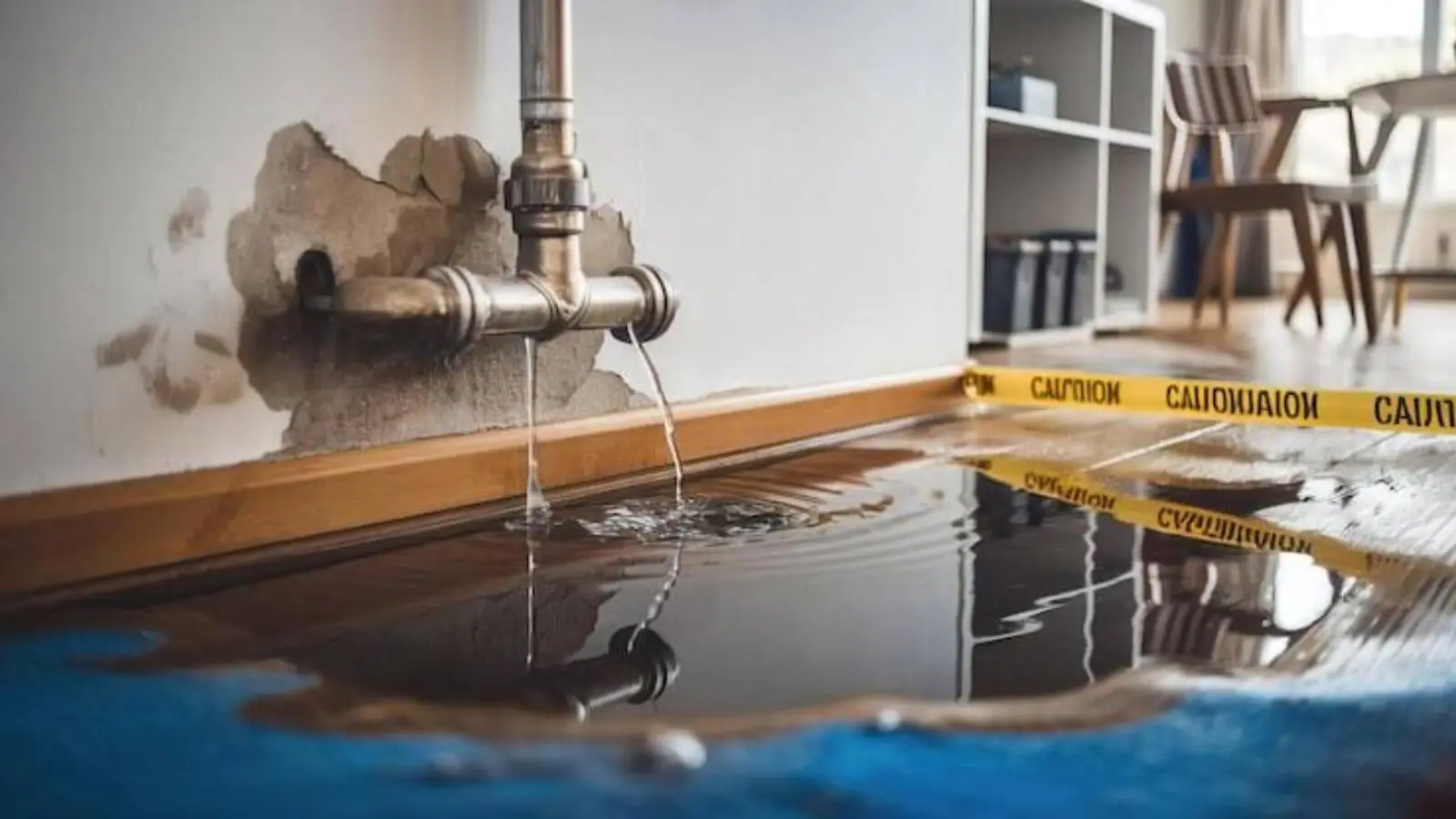
The first five minutes of burst pipe water damage
Burst pipe water damage gets worse by the minute, and most of the damage comes from what you do in the first few. Your goals are simple: stop the water, stay away from electricity, and get the right people moving. Everything else can wait.
A pipe that froze and split may not leak until it thaws, which is why a dripping ceiling can show up hours after the cold snap passed.
Shut off the water at the main
Find the main shut-off valve. Denver Water's cold weather tips say that in most single-family homes it sits in the basement or crawl space, on a wall that faces the street. Denver Water supplies Littleton residents, so those tips apply to local homes.
Turn the valve fully closed, then open a faucet at the lowest point of the house to drain what remains in the lines. If you cannot find the valve or it will not turn, call and tell the dispatcher so the next step can be planned.
Power and water do not mix
If water is near outlets, a panel, or running through a light fixture, stay out of the wet area. Switch off power only from a dry spot using a dry hand, and only if the panel is not standing in water. If you are unsure, leave the room and wait for a professional.
Thawing a frozen pipe the safe way
If a pipe is frozen but has not split, shut off the water first. Denver Water advises this before any thawing, because a pipe that cracked while frozen will flow once it warms. Use a hair dryer on low, working from the faucet end toward the frozen section, and never use a torch or open flame.
A frozen indoor meter is its own risk. Denver Water notes that it can flood a basement, and replacing it is at the homeowner's expense, so keep the meter area warm and watch it closely in a hard freeze.
- Close the main shut-off valve
- Open the nearest faucet so melting ice has somewhere to go
- Apply gentle heat with a hair dryer, moving continuously
- Check the pipe for cracks as it warms, and shut the valve again if you see water
- Call a plumber for a split pipe and a water restoration crew for any wet materials
What to remove and what to leave
Move rugs, small furniture, electronics, books and boxes out of the wet area, if it is safe to do so. Lift furniture legs onto foil or plastic so wood does not stain the floor. Leave saturated drywall, carpet pad and built-ins for the crew to assess.
Do not use a household vacuum on standing water and do not walk through water that could be touching live electrical parts.
| Situation | Do now | Who to call first |
|---|---|---|
| Water spraying from a visible pipe | Close the main and drain a low faucet | Plumber, then a water removal crew |
| Ceiling bulging with water | Stay clear and shut off the main | Water removal crew, tell them about the ceiling |
| Frozen pipe, no leak yet | Shut the valve, thaw gently with a hair dryer | Plumber if it will not thaw or you see cracks |
| Water near the electrical panel | Leave the area, do not touch switches | Electrician and the utility, then a removal crew |
| Standing water in basement | Shut the main, stay off wet floors | Emergency water removal crew |
Pipe split and water on the floor? Call (303) 952-8295. A dispatcher is available around the clock and will explain scope and price before work begins.
Call (303) 952-8295Document before anything gets thrown out
Take photos and short videos of the pipe, the water line on walls, and every damaged item before it moves. Keep a list of what you tossed with rough ages and prices paid. Save any plumber receipt or notes showing what broke.
This is the record your insurer will ask for, so more is better than less. Keep damaged material only if your insurer asks for it, and otherwise photograph it first.
Who to call and in what order
Call a plumber for the pipe and a water removal team for the water, and do both fast. Our emergency water removal crews handle extraction and setup, and the drying that follows is described under water mitigation. We do not do waterproofing or foundation repair, so those questions go to a different trade.
We also dispatch to Morrison and Aurora when a split pipe calls for the same work in those areas.
Littleton, CO: Denver Water, your meter and your insurer
Denver Water supplies Littleton residents according to the City of Littleton Utilities page, and its cold weather tips place the main shut-off on a street-facing basement or crawl space wall in most single-family homes. Walk to that valve today and make sure it turns, because that is the one move that cannot be learned during a flood.
The Colorado Division of Insurance says burst pipes and the resulting water damage are generally covered under homeowners and renters policies. It also says to contact your insurer as soon as possible, take steps to prevent further damage, and get the insurer's instructions before repairs. Additional living expenses may apply, and an insurer must provide a copy of your policy within 3 business days of a request. The advisories state no filing deadline, so ask your insurer about deadlines.
Sources: City of Littleton Utilities page, Denver Water cold weather tips, Colorado Division of Insurance consumer advisories.
Drying after the leak is fixed
Drying usually takes several days, and the goal is to bring materials back to normal moisture readings before anything is closed up. Mold can begin within 24 to 48 hours of wetting, so speed matters, but so does patience at the end. A wall that feels dry can still read wet inside.
Common questions
Shut off the main first if you can reach it safely, then call. Stopping the flow takes seconds and limits the damage that a crew has to handle.
Shut off the water, then use a hair dryer on low, working from the faucet end. Never use a torch, and call a plumber if the pipe is cracked or will not thaw.
Burst pipes and the resulting water damage are generally covered under homeowners and renters policies, according to the Colorado Division of Insurance. Contact your insurer right away and ask about deadlines and your specific coverage.
You must take reasonable steps to prevent more damage, but get the insurer's instructions before repairs. Photograph everything first.
Denver Water says in most single-family homes it is in the basement or crawl space on a wall facing the street. Find it before winter, label it, and test that it turns.