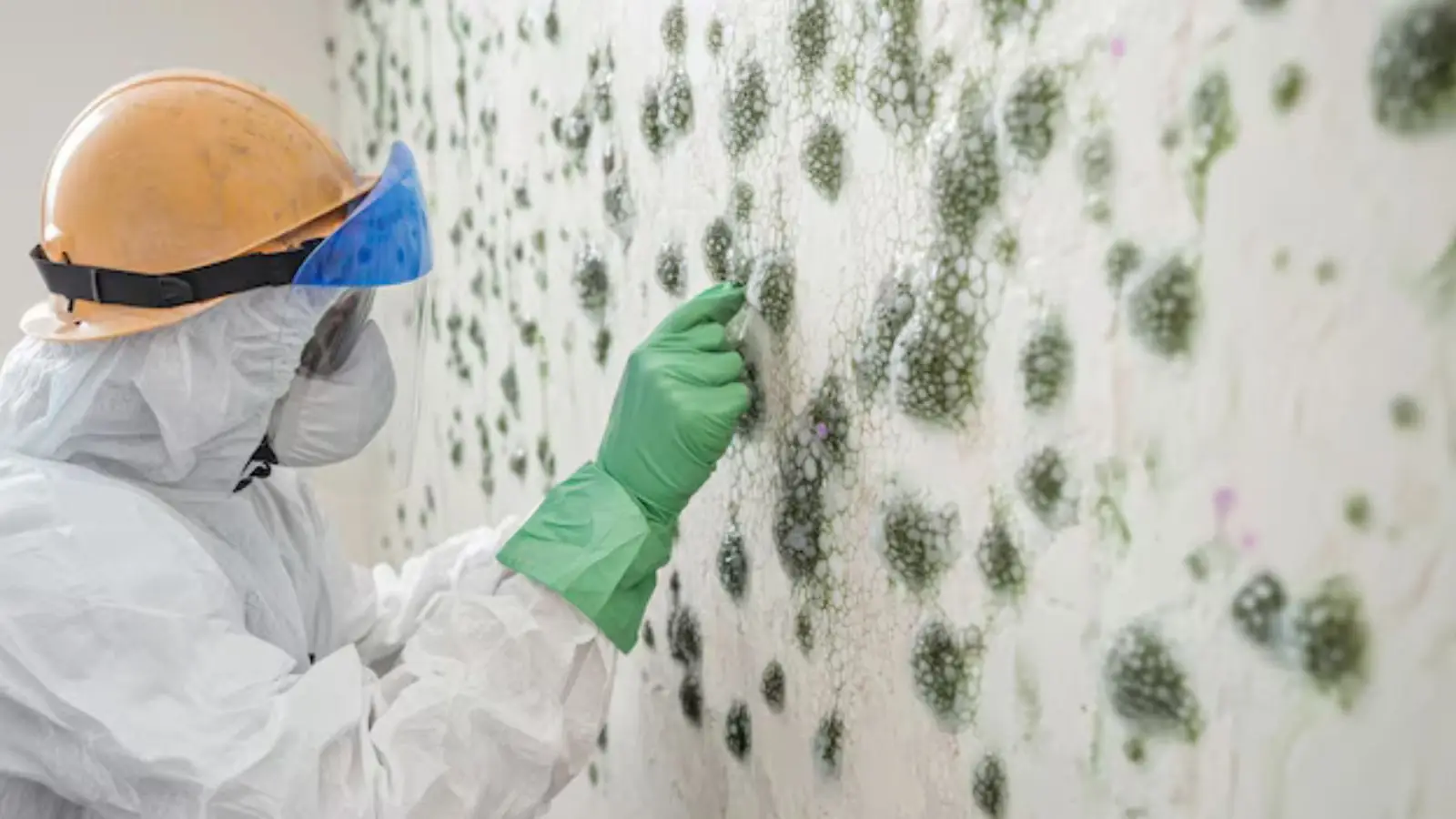
What black mold removal actually involves
Black mold removal sounds like a single task, but it is really a sequence: find the moisture, set up containment, remove or clean affected material, dry the space, and verify the result. Skipping the first step is the most common reason mold returns, so it comes before anything else.
The word black describes a color, not a species, and the color alone does not tell you how a job should be run. What matters is how much material is affected and what is causing the moisture.
Fix the moisture source first
Mold needs moisture, and it generally does not grow on materials that stay dry. A leaking supply line, a failed window seal, a condensation problem or a wet crawl space will feed new growth no matter how well the old growth is cleaned. Industry guidance says to aim to keep indoor relative humidity below about 60 percent.
That is why a good scope starts with a question about water. If a plumber, roofer or window installer needs to fix the source, that work comes before remediation or at least alongside it.
We do water damage cleanup when the mold followed a leak, and we handle the drying side. We do not do waterproofing or foundation repair, so a recurring wet basement caused by outside drainage needs another trade.
Where DIY stops making sense
A small patch on a hard, non-porous surface such as tile or glazed grout is something many homeowners clean themselves with detergent and water, with gloves and good ventilation. Porous materials are different. Drywall, carpet, insulation and ceiling tile can hold growth beneath the surface where wiping does not reach.
As a rule of thumb, larger areas, hidden growth, HVAC involvement, or any case where the cause is unknown should be assessed before you disturb it. Scrubbing and dry sanding can send spores through the house.
| Situation | Typical approach | Why |
|---|---|---|
| Small spot on tile or sealed surface | Careful DIY cleaning | Hard surfaces can be cleaned, and the area is easy to contain |
| Growth on drywall or ceiling tile | Assessment first | Porous materials usually need removal and proper handling |
| Musty smell with no visible source | Inspection and moisture mapping | The problem may be inside a wall or floor |
| Growth near a duct, vent or air handler | Professional containment | Air movement can spread material through the house |
| Sale, refinance or loan involved | Professional work plus clearance testing | A written result may be requested by a buyer or lender |
Do not bleach and hope
Pouring bleach on porous material does not remove what is under the surface and does not fix wet framing. Ask a mold professional what is appropriate for the material before you apply a product.
How professional containment works
Professional crews follow ANSI/IICRC S520, the published industry standard for mold remediation. Typical steps include sealing the work area with plastic sheeting, running negative air through HEPA filtration, protecting walkways, removing affected materials in sealed bags, and cleaning surfaces with HEPA vacuums and damp wiping.
You can ask any company whether its crews work to S520. Our mold remediation service is scoped and explained before work starts, and we do not make promises about outcomes that nobody can verify.
Found dark growth and not sure what you are dealing with? Call (303) 952-8295 and talk through the scope with a dispatcher before you touch anything.
Call (303) 952-8295Clearance testing for a home sale or loan
Clearance testing is a check done after remediation to see whether the work area meets the target set at the start. It is typically performed by a third party, not the crew that did the work, which helps make the result credible to a buyer, a lender or an insurer.
If a sale or refinance is coming, ask early what the other side wants to see. Some buyers and lenders ask for a written result, and having it avoids last-minute delays at closing.
What no honest company will promise
No one can promise a space will never see mold again, because that depends on moisture in the future. A company can promise to follow a standard, document what it found and did, and explain how the moisture source should be handled. That is the realistic standard to hold anyone to.
Health questions about exposure belong with a physician, not a remediation crew or a web page.
Littleton, CO: licensing and who can pull a permit
Colorado DORA's consumer page says not all occupations are licensed, such as roofers and general contractors. The City of Littleton requires a contractor license or registration certificate to pull permits, with classes A, B, C and trade classes, and requires proof of liability insurance. A state mold remediation license was not found in our research, so ask whether your state licenses mold work and do not assume either way.
ANSI/IICRC S520 is the published industry standard for mold remediation. The practical tie-back: when a mold job involves removing walls or touching plumbing or electrical, ask the contractor for its Littleton license and proof of insurance before work starts.
Sources: Colorado DORA consumer page, City of Littleton contractor licensing information, published ANSI/IICRC S520 standard.
What a scope and price conversation covers
Before work starts you should hear what will be removed, what will be cleaned, how the area will be contained, how long drying is expected to take, and what drives the price. Cost factors include the size of the affected area, the materials involved, how hard the space is to contain, and whether rebuilding is part of the job.
If a company will not explain those pieces in plain words before it starts, treat that as a warning sign. Ask for the scope in writing so you can compare it with any other quote you receive.
Getting started
Start by photographing what you see and noting when it appeared. We also work in Lone Tree and Englewood, and the same sequence applies there: find the water, scope the work, contain, remove, dry, verify.
Common questions
A small spot on a hard surface is often a DIY job with gloves and ventilation. Growth on drywall, carpet or insulation, hidden growth, or any case near your HVAC should be assessed first.
ANSI/IICRC S520 is the published industry standard for mold remediation. Ask any company whether its crews work to it.
Not always, but a buyer, lender or insurer may ask for it. A third party typically does the testing after remediation, so ask early if a sale or loan is pending.
It is the single most important step, since mold needs moisture. No one can promise a future result, so keep humidity in check and fix new leaks promptly.
Ask whether your state licenses mold work. For permit work in Littleton, the city requires a contractor license or registration certificate and proof of liability insurance, so ask any contractor for its Littleton license.