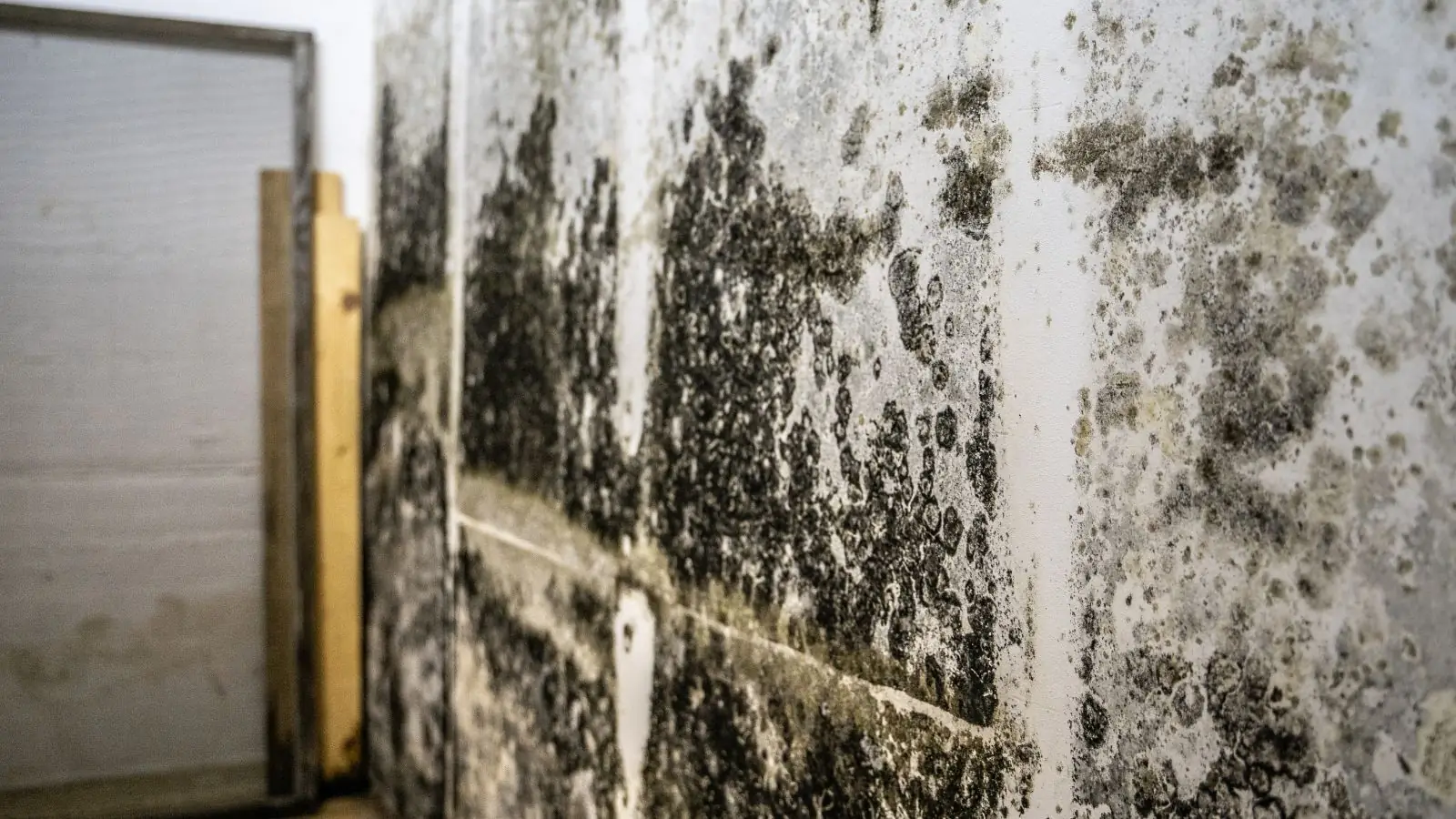
Why basements are mold-prone
Finding black mold in a basement usually means moisture has been present for a while. Mold needs only a damp surface, organic material such as drywall paper or wood, and time. Basements supply all three, with cool concrete that collects condensation and walls that sit against damp soil.
The dark color alone does not tell you the species, and only lab work can do that. What matters in practice is how much surface is affected and where the water is coming from.
Common moisture sources downstairs
- Condensation on cold walls and pipes in humid months
- Window wells that fill and leak around the frame
- Plumbing leaks, water heater drips and washing machine hoses
- Water seeping through a cracked floor slab or wall joint
- A past flood or sewer event that was never fully dried
A hygrometer costs little and tells you the relative humidity in the space. Industry guidance is to keep indoor humidity under about 60 percent, and lower is better in a basement. If your readings sit above that for weeks, mold has what it needs, and you should look harder for the source.
What to do first
- Find and stop any active water source, such as a dripping fitting.
- Photograph the growth and measure how large the area is.
- Keep the space closed off and run a dehumidifier if the area is dry enough to do so safely.
- Remove only items that are clearly wet and lightly affected, and bag them in the room.
- Call a professional if the growth is larger than a small patch or the cause is unknown.
What not to do
Do not bleach painted drywall, do not blast the area with a fan, and do not sweep or dry-brush the growth. Fans and brushing push spores into other rooms. Bleach does not reach mold roots in porous material, and it adds moisture.
Avoid disturbing the area without protection, and talk to your physician about any health concerns. We do not diagnose or make health claims.
Small patch or professional job?
| What you see | Likely approach | Why |
|---|---|---|
| Small spot on a hard surface, cause already fixed | Careful homeowner cleaning with protection | Limited area, nonporous material |
| Growth on drywall, insulation or carpet | Professional removal | Porous materials usually cannot be cleaned in place |
| Larger area or repeat growth | Professional containment and removal | Needs negative air and cleaning of surrounding surfaces |
| Musty smell, nothing visible | Find the moisture first, then inspect | Hidden growth may sit inside wall cavities |
| After a flood or sewer backup | Professional drying plus remediation | Contaminated water changes the work |
Not sure how far the growth goes? Call (303) 952-8295 and we will explain the scope and price before any work starts.
Call (303) 952-8295How professionals handle basement mold
Professional mold remediation follows ANSI/IICRC S520, the published industry standard for mold remediation. In practice that means sealing off the work area with containment, running air filtration with negative pressure, removing affected porous materials, and cleaning the remaining surfaces with HEPA vacuums and damp wiping.
The last step is fixing the moisture condition, because cleaning without drying only buys time. If the basement had a flood or pipe failure, flood damage restoration drying usually comes before or alongside removal.
Why the cause matters more than the color
Homeowners often ask whether it is truly black mold. A better question is why the area stayed wet. Removing growth from a wall that keeps getting damp from a bad window well or poor grading brings it right back.
We are not a waterproofing or foundation company. If the investigation points to drainage or a failing wall, we will tell you plainly and you will need a specialist for that part.
Littleton, CO: soils and floodplains affect basements
The Colorado Geological Survey notes that expansive clay soils lie along mountain valley sides and across the plains where most Coloradans live, and that expansion starts when the soil gets wet. Cracked basement floor slabs are among the common signs of soil movement. Tie-back for a Littleton basement: if you see a new slab crack beside damp walls, mention it to whoever inspects, because moisture entering there feeds mold.
Separately, Littleton has FEMA and local floodplains, regulated the same way, and work in one needs a Floodplain Development Permit. The city's 1978 FEMA study lists Big Dry Creek, Lee Gulch and Slaughterhouse Gulch as flooding sources, so call the floodplain administrator in Public Works/Engineering at 303-795-3863 before you plan any exterior work.
Sources: Colorado Geological Survey, City of Littleton floodplain pages, State CWCB archive of the FEMA study.
Cost factors and what to expect on site
Price depends on a handful of things you can see for yourself: how many square feet are affected, whether drywall, carpet or insulation must come out, how hard the area is to reach, and whether the structure needs drying afterward. A small hard-surface cleanup and a finished basement with wet carpet and insulation are very different jobs.
We walk the space, explain the scope and price before work starts, and tell you what we will not be doing. Expect plastic barriers, air scrubbers running for the duration, and a crew that suits up before it opens a wall.
Plan for some disruption. Furniture and stored boxes may need to move, and porous items that sat near the growth are sometimes bagged and discarded. Photograph your belongings first, because that list helps if you file an insurance claim for a sudden water event.
Where we help nearby
We take calls from homeowners across the south metro, including Lone Tree and Aurora, where finished basements are common. Bring up any past water event when you call, since that history changes the plan. We dispatch 24/7.
Common questions
We cannot make health claims. Mold of any color is a moisture problem to fix and growth to remove, and questions about symptoms belong with a physician. Only lab testing identifies species, and it rarely changes the removal approach.
Not necessarily. Visible growth is usually enough to act on. Testing can help document conditions or check clearance afterward, which follows S520 practices. Ask the company what testing would add in your case.
No. Paint over active growth hides it and leaves the moisture source in place. Remove the growth and fix the water first, then finish surfaces.
Ask whether your state licenses mold work and ask any contractor for its credentials and insurance. Licensing rules change, so confirm with the state or your city rather than relying on a blog.
Look for water entering at the crack after rain or snowmelt, and check humidity with a hygrometer. Expansive clay soil can move when wet, which can open slab cracks. Photograph the crack, dry the area, and call for an inspection of any growth.